

Oh maybe, maybe it's the clothes we wear
The tasteless bracelets and the dye in our hair…
Or maybe, maybe it's our nowhere towns
Our nothing places and our cellophane sounds…
Pastiche is a delicate artform. It can often sit on the edge of parody, but it is usually born out of respect, borrowing the style and tone of existing works to create something new. It differs from plagiarism because it is open about its intent and meant to be clearly comprehended. It is used to signal lineage, to work inside a tradition, or to trigger recognition in an audience who understand and approve of the references.
This doesn’t mean pastiche cannot be funny. But it is more subtle than the blunt instrument of parody. Most music is a pastiche in some form. Musicians inspire other musicians and styles become attractive and desirable to emulate. Although acknowledging a lineage is often something bands avoid for fear of being deemed unoriginal.
It is odd, however, for a band to create a pastiche of themselves. Many bands have certainly become parodies of themselves, but pastiche requires far greater self-awareness. It requires a deep examination of a band’s music, its cultural and aesthetic choices and how its work is understood by the public. But in order to reach this point it often requires a rupture. An event so cataclysmic that introspection and evolution are the only rational responses.
Suede arrived in the early 1990s with a fully realised musical and aesthetic vision. Famously, they were declared by Melody Maker as “the best new band in Britain” before they had even released their first single. Their debut album placed them within the canon of British bands culturally wedded to time and place, albeit highly distinct from the flag-waving or cartoon nostalgia that would follow in the mid-1990s. Suede were the Britain of decaying suburbia, they found a grim eroticism in London’s council estates and tower blocks, the drugs, the casual relationships and casual violence.
This sensibility was packaged through glam rock’s androgyny and theatrics. It was the high drama of low circumstances. A form of working-class aspirational glamour – the secondhand leather jackets worn in an attempt to transcend an inherited environment, yet bound to it all the same. The band were highly literate, musically accomplished, and with the wry wit of predecessors like The Smiths – something often submerged beneath singer Brett Anderson’s gritty themes and swaggering showmanship.
Suede’s songwriting was built on an intense creative rivalry between Anderson and guitarist/keyboardist Bernard Butler. What drove the band’s ability to emerge on the British music scene with a compelling maturity were these attempts by Butler and Anderson to outdo and impress each other. With neither man willing to concede secondary status within the process, each song became honed with an eye to perfection.
Reaching the top of the British album charts in its week of release, the band’s self-titled debut became the fastest-selling album since Frankie Goes to Hollywood’s Welcome to the Pleasuredome a decade earlier. It also won the band the prestigious Mercury Music Prize – awarded for the best album each year by a British or Irish artist. Yet, like all great bands, Suede were not simply about album sales or critical respect; they were a band people invested themselves in, they cultivated a devoted fanbase with a distinct aesthetic style – the kinds of people who understood the band as more than just “a good tune”.
Such devotion had a lot of material to work with. The sheer volume of exceptional songs that the band were able to produce in their early years was remarkable. Most musicians could spend their entire careers attempting to write a song as exquisite as My Dark Star, while Suede had the confidence – the arrogance even – to simply throw it away as a B-side. The first disc of the band’s B-sides and rarities compilation, Sci-Fi Lullabies, could stand alone as one of their best albums, were it released as such.
Suede’s initial success signalled a shift in what the United Kingdom wanted from its guitar bands: less earnest, more theatrical, unashamedly interested in glamour and artifice, and a firm rejection of the Americanisation of British rock. It placed the band at the vanguard of what would become a revival – for better or worse – of British music in the 1990s. It made the band not just writers of great songs, but culturally important. A band you had to know and engage with to fully understand the United Kingdom.
Then came the rupture.
Three-quarters of the way through recording their second album, Dog Man Star, Anderson, bassist Mat Osman, and drummer Simon Gilbert made an extraordinary decision. Butler was to be expelled from the band. The guitarist’s controlling behaviour and undiplomatic demeanour were no longer tolerable. Due to a conflict over the album’s sound, and his dictatorial presence in the studio, Butler wanted the album’s producer removed from the project – issuing a “him or me” ultimatum. The rest of the band called his bluff and kicked him out of the band.
Butler’s vision for Dog Man Star was of a dark, elaborate art- and progressive-rock record. He wanted to create an album far stranger and more ambitious than their debut. An album epic in scope, brooding, complex and atmospheric – it was to be the kind of album you could get lost inside for days.
With Butler fulfilling his contractual obligations by recording from a separate studio, without his official presence in the band, the others decided to trim back some of his excesses. The Asphalt World was originally over 20 minutes long before being halved, while The Wild Ones was shorn of its 3-minute abstract outro and refashioned into one of the truly perfect rock songs of the 1990s.
Although the album failed to replicate the commercial success of its predecessor, it remained an phenomenal artistic statement. An album of bold confidence and restless imagination. Butler’s ornate musical compositions led Anderson to write surreal and claustrophobic lyrics, which he delivered through a theatrical vocal performance. The album was gothic, if not quite goth. By its release, Butler’s exit had added to this sentiment – giving the album a strange, posthumous quality. A band who had – seemingly – produced their eulogy while still technically alive.
Suede had found themselves in crisis, but they stubbornly decided that the dismissal of Butler wasn’t going to spell their demise. The stark problem they faced was how could they meet the promotional and touring commitments for Dog Man Star without its primary musical architect? Despite his poor interpersonal skills, Butler was one of the truly great musicians of his generation – a guitarist who took Johnny Marr’s intricate, chiming melodies and gave them a more angular glam and post-punk edge. Finding someone who could not only replicate his sound, but also move the band forward seemed impossible.
When the band announced that their new guitarist was a 17-year-old schoolboy, the prospect didn’t look promising. Richard Oakes had sent a cassette of himself playing songs from Suede’s first album to the band’s fan-club. The tape wound up in the hands of the band themselves, who initially thought the recordings were demos Butler had made. Oakes was capable of mimicking Butler’s unique and complex style, enabling the band to replicate Dog Man Star’s songs live. The test, however, was whether he could compose, not just imitate.
Butler’s departure forced Suede into a period of introspection. The band had to work out what it was that actually made them Suede. How do you maintain continuity as a musical group when the guy who wrote all the music is no longer present? The key was to think about themselves as a cultural force, rather than just a band. What the band had produced was an outlook, a set of themes and a style of communication – both visual and musical.
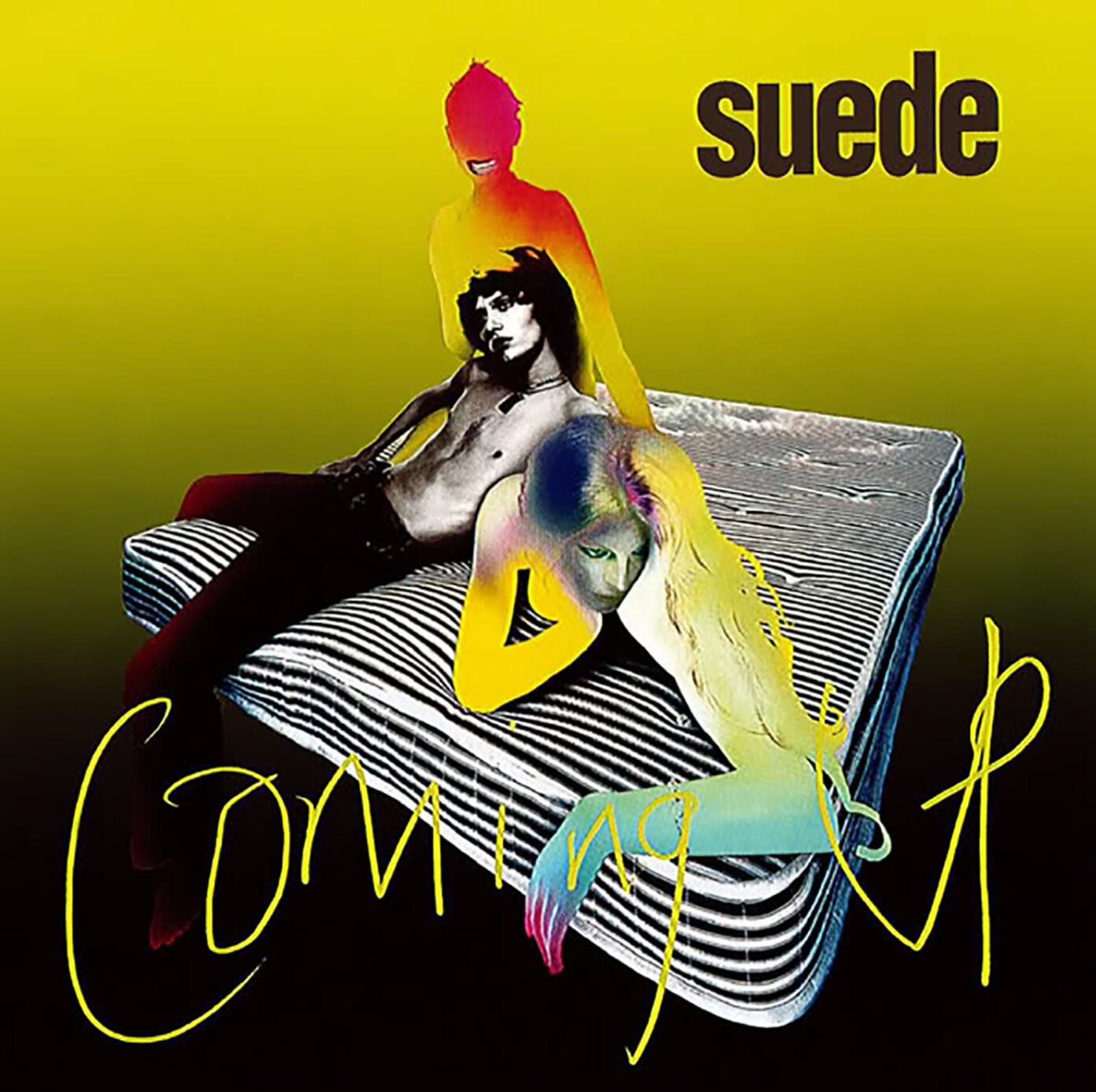
The idea, therefore, was to take these stylistic components and fabricate a version of the band that was recognisably Suede, but distinct in approach from previous albums. Rather than the brooding, expansive songwriting of Dog Man Star, the approach on Coming Up was to create songs tighter, brighter and built around the immediate connection of pop music. They would take the idea of the pastiche and apply it to themselves: ten songs that could each stand alone as a radio hit, but which collectively embodied the ethos and essence of Suede as a cultural entity.
Coming Up’s concept required not only a high degree of self-awareness, but the ability to be self-deprecating as well. To understand the world that the band had created through their first two albums – the drugs, the melodrama and the rough glamour – and be able to make themselves the objects of their own satire.
This mining of the band’s subject matter, while pivoting its musical approach, can best be illustrated by contrasting the songs Daddy’s Speeding from Dog Man Star with Filmstar from Coming Up.
Daddy’s Speeding is a song about James Dean. It is built on an ornate lyrical romanticism of Dean’s fatal car crash, using it as metaphor for a glamorous but reckless masculinity, and the allure this holds within our culture – “Broken glass for teenage boys, trapped in steel and celluloid”. The music is one of Butler’s more complex compositions, beginning with a plucked acoustic guitar and sparse piano, before abruptly pivoting to a clipped, metallic guitar, then a carousel organ, before building to a layered, dense, intensity, until it all eventually collapses – depicting a car crash.
Filmstar, however, takes the same cultural idolisation and reduces it into a mocking simplicity – “Filmstar, propping up the bar, driving in a car, it looks so easy.” It recognises the celebrity romanticism of Daddy’s Speeding and twists the drama into a wry, knowing tease. Oakes’s guitar riff is blunt and repetitive, an exaggerated glam strut. The sound of a film star’s magnified public presence.
This was a way of making the band fun. Of course, the weight of this self-caricature fell on Anderson’s lyrics and vocal delivery, but Oakes also understood the mission, writing riffs that paid homage to Butler’s style while having the buoyancy to be radio friendly, and the sheen to complement the album’s design.
Coming Up’s conceptual approach found its exemplar in Beautiful Ones, a song that sought to distil an inventory of Suede’s cultural indicators into a signature anthem. It took the subject matter that on their first two albums would be dramatic and introspective, and made it outward focused, communal and singable.
Oh, high on diesel and gasoline, psycho for drum machine, shaking their bits to the hits
Oh, drag acts, drug acts, suicides, in your dad’s suits you hide, staining his name again
Under pressure from Osman to write a guitar line worthy of a top ten hit, Oakes created a riff that was both intricate and propulsive. An instantly recognisable hook that could send a festival crowd into rapture upon hearing its first few notes.
Beautiful Ones also underlined how central aesthetics were to the band’s identity – a reminder that Suede’s glamour had never been incidental to the music, but a second, equally deliberate element running alongside it. The band had always been meticulous about their imagery, from maintaining a consistent band logo font across releases to the deliberately provocative imagery used on their album covers.
Coming Up produced a new aesthetic tool. During recording, when drummer Gilbert’s cousin, Neil Codling, dropped by the studio to borrow a suit for a job interview, he was recruited into the band instead. Beyond his multi-instrumental skills and a voice that complemented Anderson’s, Codling understood his visual role instinctively, playing the detached, cool foil to Anderson’s on-stage exuberance. His photogenic presence made him as important to the band’s image as to its sound – giving him a prominent role in the Beautiful Ones video.
The cleverness of Coming Up was that Suede didn’t try to escape the identity they had spent two albums creating. They embraced it, streamlined it, and shifted how they communicated it. They created a version of themselves that understood their own tropes well enough to be playful with them. In becoming a pop pastiche of themselves, they transformed the loss of Butler from a threat to their existence into an opportunity to expand what they could do.
The production of the album reinforces this pop pastiche on every level – the continent-sized hooks, anthemic choruses, the toe-tapping beats, the handclaps, and la-la-la’s. Nothing was subtle, nothing was hidden or designed to grow on you. Where the music was expansive – like on The Chemistry Between Us – it was earned through a gorgeous string-led outro that could capture the listener and transcend the standard time limits of pop music.
True to the band’s desire to write a record of start-to-finish hits, five singles were drawn from the album – exactly half its ten tracks – and each one reached the top ten on the British charts. The album itself outsold its two predecessors combined, expanding the band’s influence as a major cultural force.
Critics have long treated the album’s lightness as a diminishment. Those invested in the gothic weight of Dog Man Star may have found the transition odd or disappointing. But Coming Up’s lightness of spirit wasn’t the band lowering its ambition, it was a demonstration of it. It was a concept album, but the concept was the band itself. It was its own, distinct, artistic statement.
The standard critique of pastiche is that it has become the default mode of modern culture – not consciously chosen, but simply what we are left with once our culture lost the capacity to produce anything original. Artists, in this account, are without agency, left only to mimic what came before them.
On Coming Up Suede inverted this. The band weren’t out of ideas and pastiche wasn’t what they simply fell into, it was a deliberate, controlled strategy. One chosen when other options were still available to them. This is also what makes Coming Up such a canny album. It was a partial reinvention, but one that was self-aware and droll. The sound of a band post-rupture understanding what they had previously created, and deciding to make their most “Suede” album.