

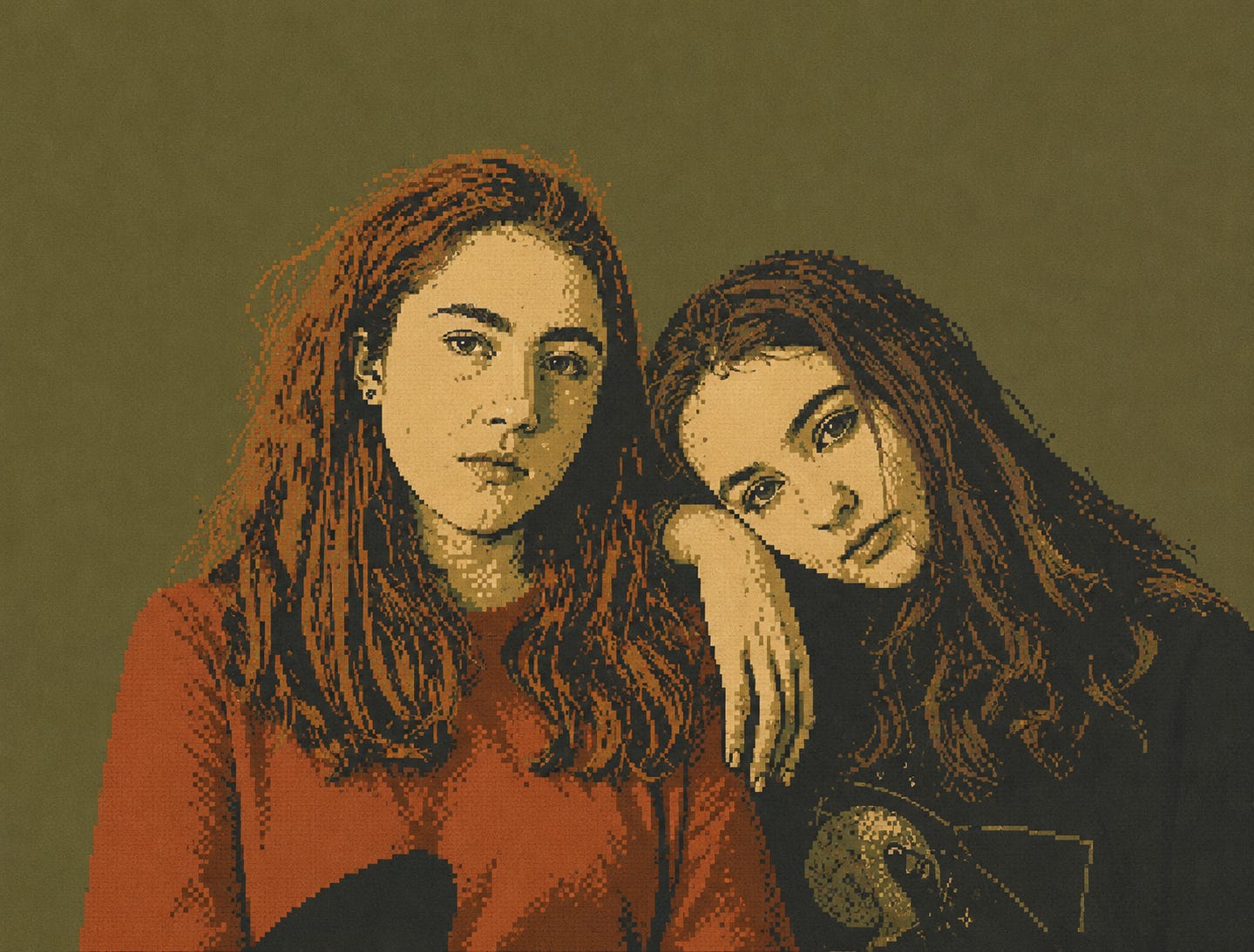
For the ancient Greeks, friendship was essential to the good life. Aristotle described the ideal friend as allos autos or another self – not a copy of yourself, but an extension to you. Just as we cannot see our own face without a mirror, he argued, we cannot fully know our own character without a friend who reflects it back. Friendships are distinct from other social relationships – including family – as they must be reciprocal, requiring acknowledgement and commitment from both parties.
Aristotle identified three forms friendship could be based upon: utility, pleasure and character. The first values someone for what their company offers practically; the second for the joy it produces; the third – which is the highest form – is a friendship based on who we actually are.
While each of these models could be understood as separate forms of friendship, it is also clear that they can work in conjunction with each other. Usefulness, enjoyability, and mutual trust can work in harmony to produce a compelling friendship. It is here where we are not only able to navigate the world as social animals but flourish within it – both individually and together.
Yet, it is the final form of friendship, which Aristotle called philia, that is distinguished from the others by an important defining feature: it is friendship in and of itself, not as a means to something else. This form of friendship not created quickly, it is built and earned from shared experience, often hardship, and the accumulated knowledge of another’s character.
Friendship of this order carries a sense of duty. Recently the concept of duty has acquired negative connotations. In our age of advantagemaxxing there’s a belief that it is an imposition – an external threat to our self-interest. But duty is something far more important and profound. Duty is the mutually beneficial foundation of our social lives. It is an investment in each other, one that compounds over time.
As we’ve drifted away from duty, privileging self-actualisation as our primary social good, we have become more lonely, more disconnected, and more suspicious of each other. Duty is the concept that overcomes these personal, social and political problems. It is what gives us purpose as people, and restores self-worth and dignity. These obligations are broader than friendship, but it is within friendship where they are exemplified.
Let’s Eat Grandma are a duo built on the friendship between Jenny Hollingworth and Rosa Walton. Their name is a grammar joke, with a comma dramatically changing its meaning, the kind of joke that amuses inquisitive teens. Friends since the first year of primary school in Norwich, they’ve been making music together since they were 13, releasing their first album as 17 year olds.
Their debut album, I, Gemini, carries the heavy imprint of teenage friendship – in-jokes, mutual intuitions, and a self-contained world of two built over years of closeness, where meaning is often encoded between them, rather than needing to be explained. It’s the kind of shorthand that develops through long mutual experience. The album comes across like a shared inner mythology, a friendship finding its eccentric expression through music.
The duo’s second album – I’m All Ears – was a more mature work, transforming from lo-fi bedroom must into a more sophisticated form of electronic pop, moving away from their often meandering song structures into music that is more produced and deliberate. It was also a more outward-facing album, no longer just speaking to each other, but now thinking about an audience that needed to be spoken to.
The album contained two extraordinary pop songs in the futuristic Hot Pink and ever shifting Falling Into Me, both exhibiting a maturity of sound and vision, and a distinct musical personality as a duo. It was clear that their songwriting had taken a significant leap forward.
This shift in the music reflected something happening in the friendship itself. I, Gemini had the quality of a childhood bond that hasn’t yet been tested – effortless and self-contained, the two of them a world unto themselves. I’m All Ears registers the first pressures of growing up: the point at which a friendship enters what Aristotle would recognise as a more mature phase – when two people start becoming distinguishable from one another, and maintaining the same ease of connection requires a more conscious effort.
For much of Let’s Eat Grandma’s early career, they were treated – and treated themselves – as more or less interchangeable. Their closeness was so total that audiences and the media regularly assumed they were siblings. Yet growing up changed this. As they moved into their twenties, they moved out of each other’s pockets. Even though they were still bound by their friendship, and by their band, there was a recognition that as adults there were different interests, different paths, and different obligations pulling each of them in competing directions.
Their third album – Two Ribbons – is where this registers in the music. For the first time they wrote the songs independently, making the album speak without the fused voice of their earlier work. Instead it is a work that is written from two separate vantage points. The album title reflects this: two distinct threads, running parallel, sometimes pulling in different directions, but often crossing over. It is about what happens when the friendship you build through childhood and adolescence develops a different shape in adulthood.
It is on the song Happy New Year where this takes form. It is a song written by Walton to Hollingworth about their friendship. The song acknowledges the strains of the shifting dynamics within their friendship, yet it endures because the bond is far greater than any competing interests could weaken. The song is an Aristotelian movement. Friendships of utility collapse under strain because what is being exchanged is being disrupted. Friendships of character survive – not in the same form, but deepened – because the utility, or the pleasure, is not the point.
Happy New Year is an expression of the duty of friendship. The song recognises the bond between them as an obligation – a commitment to each other’s character that holds regardless of circumstance. But duty is not passive; it requires action and purpose. The song was written after a breakdown in the friendship, making it an act of duty being fulfilled. Walton understands this by reframing their individual trajectories as a positive – It’s ok, say what you want to say, and that we’ve grown in different ways.
For Aristotle, a friendship based on character is not meant to be another version of yourself, allos autos means someone through whom you can see virtue operating in a form other than your own. A childhood friendship, like that of Let’s Eat Grandma, was in Aristotelian terms, a kind of proto-philia: connected and warm, but not yet the fullest version of itself because neither person had yet fully become themselves. Growing into distinct individuals is not a threat to this kind of friendship; it is the prerequisite.
Yet there is a complicating factor to this philia in the form of the band themselves. Walton highlights this through the line “and look at what I’ve made with you”. There is an obvious utility to the friendship, as there is a creative endeavour involved – the two rely on each other to keep the band going. Yet the acknowledgement here is something distinct, it recognises that the music they make is the fullest expression of their friendship. They’ve been able to convert their closeness into artistic merit.
There is also a wonder here that Walton is communicating. A sense that their friendship has a capability beyond what either of them could have anticipated. Most close friendships remain private; what is rare is when that closeness finds a form it can give to the world. This is not just marvelling at the music they’ve made together, but marvelling that there is something unique and important their friendship has provided to others.