

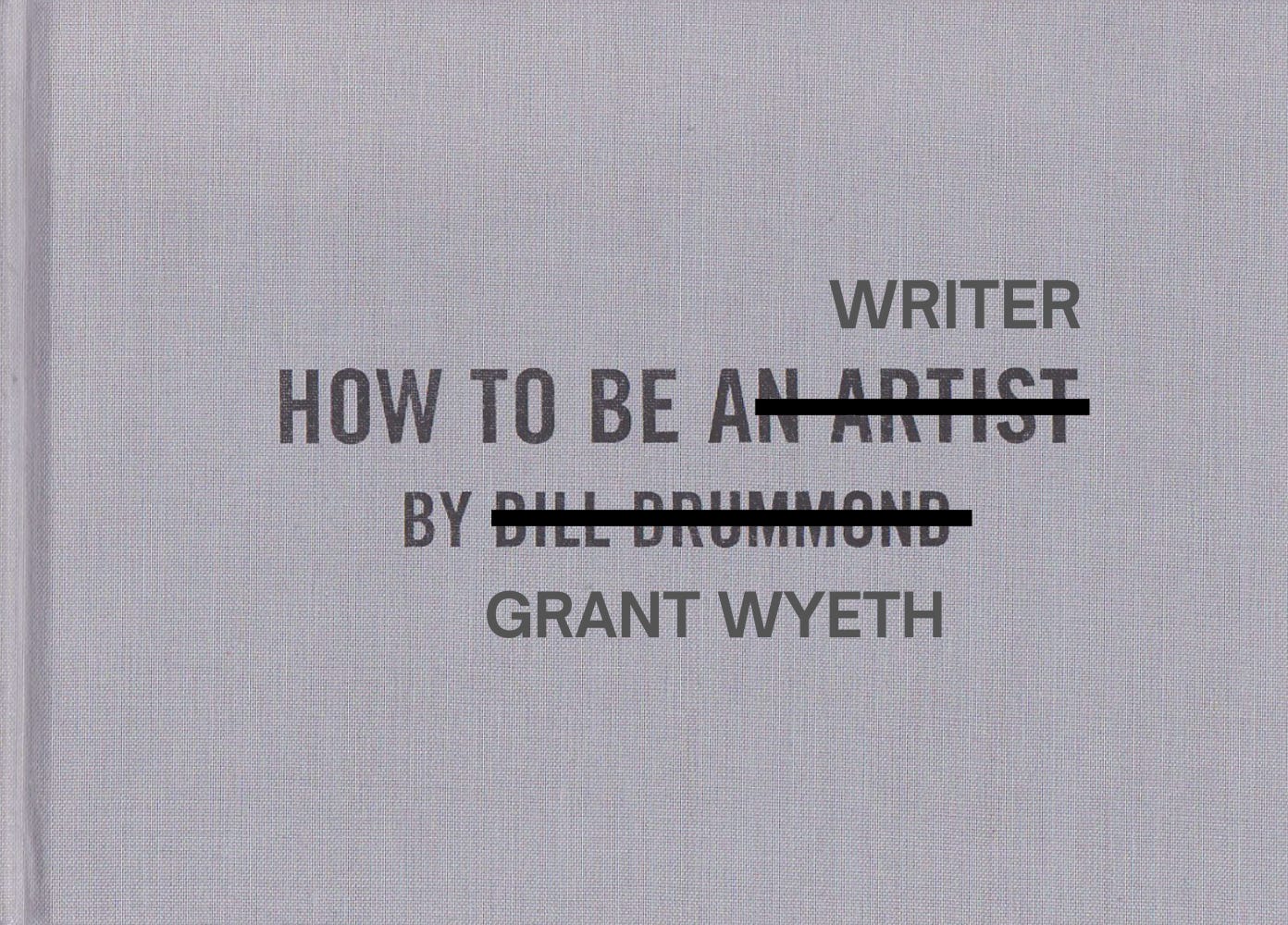
Berwick Street in London’s Soho district is slightly different now. In my early-20s it had a large number of record stores. It was the place to be on a weekend for a guy like me. While a significant percentage of my meagre income was spent on CDs, Berwick Street was also the place to just be seen flicking through racks. While new releases may come, and you may already know what would be in each section, the point was to be seen flicking through them nonetheless.
Nowadays Berwick Street has undergone an agglomerative shift. The record stores have mostly gone, replaced by tasteful men’s fashion. The kind of stores where you spend a lot of money to look like you made a bit of an effort, but not too much. Essentially Berwick Street has been servicing the same men over the past 20 years. Just in different phases of their lives.
At the end of Berwick Street lies a narrow laneway called Walker’s Court. Here, a different kind of servicing remains. Despite the accessibility of pornography on the internet, live action porn has had a persistent presence. Markets may shift, and men’s interests may change, but men’s interests also never change. And no market is more stable than one that bets on these most base masculine desires.
However, back when I lived in London, at the end of Walker’s Court, heading down towards the theatre district along Shaftesbury Avenue, there was a bookstore. Consistent with the shops around it the store had its “blue” section, but it also stocked a range of other books mostly related to art, music and culture. Music writing had yet to be dispersed by the internet, and alongside the weekly British music press there was a good market for books on bands, styles and scenes – for the men along Berwick Street who needed more in-depth detail than the NME and Melody Maker could provide.
Yet it was the British music press that provided the cultural scaffolding. During its peak the British music press’s job was to create a mythology around bands. It’s why bands who were shit, but had a good story, could still be compelling – good music was often secondary to good music writing. This is why British bands generally had a mystique and allure that couldn’t be matched by bands from elsewhere in the world. It’s also why Britain’s soft power has waned with the decline of the country’s music press. It was the platform on which Anglophilia was built.
As a teenage Anglophile this mystique made moving to London essential. In Australia, culture still came by ship (and maybe still does), and so Au Go Go Records on Little Bourke Street in Melbourne would stock the NME and Melody Maker, but they would be several weeks late. Despite this, reading them felt exciting all the same – but the potential thrill of buying copies of the music press the week they came out made it clear that London was the place I needed to be.
However, by the time I got there Melody Maker was dead. While the NME was still breathing, its trajectory towards becoming an online only publication was inevitable. Despite this, music had yet to transform into the everything everywhere all at once smörgåsbord it is today. Time still mattered to music, and London still felt like it was the place where now was happening.
One weekend, after doing the rounds of record stores, I popped into the bookstore in Walker’s Court. The store had a display of a blue-ish tinged book, with a close-up of a man’s face – too close to see who it actually was, but it was intriguing enough to pick up. A sale price of £5 was also enticing. The book was called 45 by Bill Drummond, and was a series of short stories from Drummond’s life to date. Media quotes on the back claimed that “Stories bristle with brilliantly insane schemes which often go awry…” and “a catalogue of ludicrous exploits and lucrative failures.” It looked like it was worth a read.
Although Scottish, Drummond began his artistic career in Liverpool in a band called Big in Japan. Big in Japan were notable for being a band less than the sum of its parts, having no success themselves, but each of the band’s members going on to find great success away from each other.
Holly Johnson would become singer in Frankie Goes To Hollywood; Budgie would become the drummer in Siouxsie and the Banshees; Ian Broudie would write both one of the most wholesome songs of the 1990s, as well as England’s unofficial national anthem, while David Balfe would initially play keyboards in The Teardrop Explodes, before forming the label Food Records, signed Blur, then became rich by selling the label to EMI. Blur would subsequently write “Country House” about him and his newfound wealth.
Drummond himself would first become the manager of Echo & the Bunnymen, before discovering the sampler, and in conjunction with electronic artist Jimmy Cauty, formed The KLF, who would launch a cultural assault on pop music by deliberately and brazenly seeking to infringe on copyright law. The two would lift fragments of well-known songs, TV themes, and news broadcasts and set them to new beats. The provocation was aimed as much at lawyers as listeners. To reframe pop music not as entertainment, but as a vehicle for confrontation.
The skill behind sampling – particularly from its emergence within hip-hop – was finding new possibilities within an existing hook – reframing and transforming music to create something familiar, yet unique. Taking this approach, the duo’s breakthrough came by fusing Gary Glitter’s “Rock and Roll”, The Sweet’s “Block Buster!”, and the Doctor Who theme, into Doctorin’ The Tardis (temporarily renaming themself The Timelords to fit the song’s theme). The pair subsequently wrote a book called The Manual (How to Have a Number 1 Single the Easy Way) – a step-by-step guide to the creation of a novelty hit.
Yet the pair were working with a vision far broader and more strange than just the creation of novelty songs. From the proceeds of their first number 1, they created an “ambient road trip” film called The White Room. The film traces the journey of Drummond and Cauty from their studio Trancentral in south London through Spain in search of the mysterious “White Room,” a transcendental space where perfect music supposedly exists, and where they would be able create the perfect pop record.
The romanticism of road trips inspired a temporary pivot away from pop into ambient music. The concept of their album Chill Out was that of a drive by night through the Gulf Coast in the United States. Taken as a whole 45 minute piece of music, fragments of sound drift in and out, as the road and wind pass by the vehicle, trains roll in the distance and radio stations scan in and out. It is a work in constant motion – sounds arrive, overlap, and recede, producing the feelings of moving through different environments without stop, mirroring the hypnotic rhythm of long-distance driving. The album is eerie, nostalgic and evocative.
Then came the bang. Anyone with an ear near a commercial radio station in the early-90s would know The KLF, although very few would actually know The KLF. Songs like What Time Is Love? and 3am Eternal may have been catchy dance-pop toe-tappers, but on closer inspection were filled with lyrics that were both highly self-referential and absurdist. As the radio was my closest childhood friend, at the time these were songs simply singable anthems, it was only after going down Drummond’s rabbit hole did what was actually going on start to reveal itself.
Central to The KLF was the idea that mythology was central to music’s power, and rather than a commercial product, music instead should be a surreal experience. The duo also referred to themselves as the Justified Ancients of Mu Mu (The JAMS) – taken from the satirical conspiracy novels The Illuminatus! Trilogy (with this also being a nod to the lost continent of Mu in the Pacific) – creating a world cryptic fantasy and mischief designed to blur the lines between pop music, performance art and absurd imagination (and convincing Tammy Wynette to play along).
At the core of this project was a belief that music loses its power when it becomes too rational. By surrounding their music with stories, hoaxes and rituals, The KLF sought to convey that pop’s appeal came from folklore – where it could be strange, exciting and resistant to neat explanations. An approach that led to both enormous success and wild acts of self-sabotage.
Invited to play 3am Eternal at the British Record Industry (BRIT) Awards in 1992 they instead hired Extreme Noise Terror to butcher the song, culminating in Drummond machine gunning the audience with blanks (before dumping a dead sheep at the awards’ after party). The duo then decided to dissolve The KLF at the height of its success, renamed themselves The K Foundation to establish an art award for “the worst artist of the year” (whose short list was identical to the prestigious Turner Prize but prize money double), and then subsequently took off to the Isle of Jura and burned £1 million.
This was all thrilling stuff. The actions of a highly creative mind which had both the audacity and commitment to pursue whatever wild ideas he could dream up.
It is this creativity and how it intersects with music mythology that drives much of Drummond’s book. Its opening story concerned a journey Drummond and Mark Manning had taken through Finland in the hope of placing an icon of Elvis Presley at the North Pole. Their theory was that the icon would radiate “good vibes” down the Earth’s leylines and bring about world peace.1 What the trip really needed, however, was a soundtrack – as was the concept behind Chill Out, any proper road trip required the radio play a central role.
With Finnish radio itself not sufficiently servicing the job, the pair decided to create a series of fictitious Finnish bands – inhabiting their own localised genres like Lapp-Punk and Arctic Soul – and then hire a group of local musicians to record songs by these imaginary bands. Drummond and Manning then created a Finnish record label, pressed the songs up as 7” records and let them float out into the record stores of the world, to be randomly discovered by those men along Berwick Street flicking through the racks.
Before the internet placed every detail of an artist’s life at our fingertips, mystery was an essential component of music’s appeal. A listener might have known only a few scattered clues – whatever could be gleaned from an album sleeve, a handful of photos, a place of origin – with the rest filled in by imagination. For bands who caught the attention of the British music press, these fragments could be expanded into narratives that made them feel part of larger social dramas rather than simply composers of songs.
One of the key ideas running through the book is that the true art of music lies in the stories surrounding it. It is experienced as moment, memory, and mythology, with tales accumulating and distorting over time. The attraction of a band often lay in what surrounded the music as much as in the music itself – what they were doing when they weren’t playing instruments, and what listeners believed they might be doing. This was the romance of music – the conjecture, fantasy and personal meaning. The enigma of Finnish bands that may or may not actually exist.
From “the classic four lads out against the world” of Echo & the Bunnymen to the “dickhead factor” of Julian Cope of The Teardrop Explodes, Drummond understood that compelling music required a conviction and projection of style – both aesthetic and attitudinal. Pop, in this sense, operated well beyond chord structure and vocal melody. It was an art form that thrived on personality, myth, and the space listeners were free to fill with their own speculation.
Of course, the modern music environment doesn’t mean great music cannot be written, Ditto by NewJeans is a perfect pop song, but the information overload of K-Pop leaves very little to the imagination. It may draw you in emotionally and make you feel connected to group members, but it doesn’t allow you to imagine your own vision of the artist. Given how tightly controlled and directed they are, the “story” around K-Pop groups isn’t very compelling. There are no fuck-ups and losers, no grand conceptual overreach, no antagonism and combativeness, no spicy quotes in the press. The mess of humanity; the things that give art a “lived in” experience, has been stripped out.
Which is what Drummond seeks to convey as music’s real attraction. The book returns to Finland as he finds himself drawn to creating a whole album by his invention of Kristina Bruuk – an Estonian woman, turned Helsinki heroin addict, and the permanent loser of the Finnish music scene. Convinced of her own genius, yet met with little interest in her work, it is her persistence and the rumours that swirl around her that makes her compelling. The type of outsider artist that – were she real – obscurity hounds would obsess over.
Alongside the project itself, what was compelling is how Drummond built this story around the number 14 bus route as he travelled from central Helsinki to the recording studio each day. This was not just the recollection of one of his artistic schemes, but a demonstration of the art of the short story. It is how a writer builds an allure of a place through its topographical details – transport routes, street names, or shops. He makes similar use of this device later in the book with London’s 68 bus route.
While road trips have their place, it is public transport that houses a city’s soul. There is no knowing a city without knowing its public transport, and the first, and most important, task when arriving in a new city is to get yourself on it. Far from being just a mechanism to get from A to B, public transport is how you observe and understand a place – one eye out the window, one eye on the carriage. It’s how you grasp a city’s urban structure, political economy, and the character of its people. For a writer, the most important skill is being a “noticer”, and there is no better place to notice things than on public transport.
Using public transport as a stylistic device was therefore just as important to me as Drummond’s imagination and audacity. It was here that the book provided me with something far greater than just a good read, it gave me a keen sense of purpose. I was going to become a writer. I was going to throw myself headfirst into the world, to have big, bold ideas and follow them towards their canny conclusions. I would become interesting and unique, and I would master the art of the oh-so-clever personal short story.
But it didn’t quite work out that way.
Instead, after much floundering and lack of direction, I ended up in the practical world of foreign policy, where – at least in Australia – the field is approached through the sober reality of what is possible to advance the country’s interests given the realities of hard power and the constraints of current global conditions. This is important work, but it’s not fantastical. There’s no mischief or myth-making, no wit and whimsy, just careful deliberation and measured, diplomatic, tones.
Alongside policy briefs and options papers, one of the central modes of influence in this field is the 800-word opinion piece, or op-ed. Here the objective is to present a clear viewpoint on a current affair, providing evidence and insight. The brevity of the piece means there is a focus on economy, with a tightly structured argument attempting to persuade the reader within a limited space.
This is something I’ve become quite good at, but given my itch to be a little bolder, I have also tried to use these op-eds to be more creative. I’ve sought to perfect the art of the format by finding an inventive theme or concept to frame my arguments, engaging in the slow reveal with knowing clues, to have an elegant rhythm and lyricism that builds towards a clever, biting conclusion. My goal has been to write an 800-word op-ed that can be hung in The Louvre.
However, editors often don’t understand what I’m trying to do, or privilege the “news hook” over my literary devices. This is a particular problem here in Australia where attempting to be original and clever is to invite suspicion. We don’t tolerate big or bold ideas in this country – the purpose of writing is simply to convey information. If you’ve got something interesting to say, or worse, a crafty way of saying it, you best say it elsewhere.
So there has been both an institutional and cultural restraint on my ambition – a field of furrowed brows within a nation that thinks using more than two syllables is an unnecessary effort. Despite this, I’ve got big ideas, a keen eye, and a broad and distinct knowledge-base that can stretch beyond the narrow lanes of commentary into something more imaginative and expansive. The writers who excel at this have a hungry curiosity, an ability to synthesise ideas across fields, and a flair for shaping observation and thought into artful prose.
In order to be such a writer, my starting point has been to go back to my original inspiration. Much like sampling, the idea has been to find a preexisting hook, insert myself into it and build something new and distinct. It’s not theft, it’s admixture and advancement. It is this device of artistic transformation that Drummond uses in his story The Smell of Money Underground, where he repurposes the artwork of Richard Long to create a new narrative and artistic gesture of his own.
Drummond had become interested in Long’s work as it aligned with his interests. Long’s art revolved around long walks through a wilderness, creating a stone circle in a specific locale, and then photographing it. The appeal here is obvious; if the terrain won’t allow for public transport, then foot is your best option, while stone circles carry a pagan mystique – evoking rituals of dance and offering, giving honour to unseen, mystical, forces.
With his recent cash-burning in Scotland, Drummond wanders into the d’Offay Gallery on Dering Street in Mayfair hoping to find a work of Long’s from the Isle of Jura. He has no such luck, but he is shown a work from Iceland called The Smell of Sulfur in the Wind.
Drummond recognises the broad location of the work as when he was 17 he and his sister had hitched a ride on a fishing trawler to Iceland and then attempted to walk across the island from south to north. The pair gave up around Lake Askja, near where Drummond thinks Long had created his stone circle. The symmetry compelled Drummond to purchase the photograph. It was US $20,000. Both the amount, and the currency, surprised him. He bought it anyway.
In November 2020, I travelled to Iceland to help a friend with a court case. The winter was bleak, and the situation bleaker, and this was made more surreal by the restrictions to normal life due to the COVID-19 pandemic. I was meant to be in Iceland for three months, but due to Australia closing its borders – and airlines continuously cancelling flights – I stayed for six. Despite these circumstances, I was enamoured with the place.
The country has an enormous gravitational pull. You feel on the edge of the world, the landscape looks alien, with its black volcanic plains, glacial rivers and jagged cliffs. It’s immense and dramatic. Björk had sought to capture the sound of this landscape on her Homogenic album – with its ominous, distorted beats and sweeping icy strings. This was geology as music, tectonic pressure in your eardrums, it created an attraction to the place long before I set foot inside it.
It is Iceland’s unique geography that has allowed the country to retain its idiosyncrasies, even as its tiny population has connected itself globally. The Huldufólk (hidden people) and Draugar (restless spirits) that permeate the culture create an additional otherworldliness. Unlike English, which in an act of linguistic cowardice dispensed with the letters ð and þ, the Icelandic language maintains its distinct look, transmitting the deep mythology its medieval sagas through its own topographical details like geographical features, place names and shop fronts.2
For Drummond, such folklore and mystery added an extra layer of power to Long’s photograph. There was a certain kinship between his own playful imagination and the whimsy of Iceland. The country also played a central role in his mental map of how things actually work. According to Drummond, the leylines that he and Manning had hoped to transmit “good vibes” down with their icon of Elvis at the North Pole had only three fixed points on Earth they continuously travel through – Iceland, New Guinea, and Matthew Street in Liverpool. It was obvious that Iceland had a magnetism that needed to be hooked into.
Despite this intimate connection, as the story progresses Drummond falls out of love with the photograph. He wonders what the purchase was actually about – the memory of the trek he and his sister took? His esoteric fancy for Iceland? The historic mysteries of stone circles? Or just the luxury of being an art-buying wanker?
So he decides that he will sell the photograph for the original $20,000 he paid for it (despite the fact that its value had risen); return to Iceland with the money in a box, walk across the island until he finds Long’s stone circle, and bury the cash underneath it. He would then photograph the stone circle from the same angle as Long, have it developed and framed, and then place it on his wall where the original lay. He will call it The Smell of Money Underground.
Yet selling art is a difficult business. Most people don’t have $20,000 lying around dedicated to whims, and given Drummond’s plan for the cash, anyone who might would probably be wary of being associated with him and his obtuse schemes. Despite having paid such a price for Long’s work, the d’Offay Gallery had considered Drummond too suspicious a character to interview Long for a magazine feature.
As was the case, Drummond had another layer of metacommentary planned – a book about his attempt to sell the photograph called How To Be An Artist. In the book, Drummond takes off on another road trip, this time straight up the guts of Britain, from Southampton on England’s south coast to Dounreay of Scotland’s north coast. He attaches “For Sale” signs to various structures, and gives a variety of talks to local community centres attempting to explain his relationship to art, why he no longer likes Long’s photograph and why he wants to sell it. The book’s point seems to be for Drummond to embarrass himself for his own pretensions.
Drummond’s talks elicit little but bemusement, and no buyers. So he devises a new plan to get the $20,000. He cuts the artwork into 20,000 pieces and tries to sell them for $1 each. Was this a radical act of artistic vandalism? Or an inspired form of artistic alchemy?
At the time of the book’s release I had a temp job managing the file archive for a law firm in the City and I rushed down to the Waterstones on Leadenhall Street on my lunch break to grab a copy. Most importantly, inside the book were instructions on how to secure a piece of the photo. Which I promptly did.
Depending on how you define it, I don’t really own art. In my flat in Collingwood I have nothing on the walls. I have a plan for framed maps of my favourite places – a big map of Iceland – and prints of metro systems I love, but I’ve never gotten around to buying any of these. I can’t claim to be knowledgeable about art in its conventional sense, I certainly don’t have $20,000 to spend on any. But this was a piece of art I understood. It was turned into words. It was an escalating aggregation of ideas. It was mischievous. And there was just a little piece of physical evidence to hold, which made me at least feel like I was an owner of art.
Until I lost it. After returning to Melbourne I lent the book – with the segment of photo inside – to a pair of friends. I was restless and keen on being elsewhere, so I decided to head to Montreal for a year. I didn’t need the book and the photo segment, I would pick them up when I got back to Melbourne. Except I never did – and as lending works, each year that passes the ability to ask for your stuff back becomes more absurd.
However, the situation is more complicated than just the informal statute of limitations on borrowed books, as the couple that I lent the book to happen to now run Perimeter Books up on High Street Thornbury – an art book store and publishing house. They know the value of the 1/20,000 of Long’s photograph more than most. That slither of photo – and the now out-of-print book – is sitting on a shelf in their house gathering allure and esteem. It’s a little piece of Drummond’s mind, it carries the weight of his catalogue of endeavour and adventure. No-one in their field is going to give that up.
Yet this tiny fragment of a photograph has grown in my mind into something enormous. Its monetary value matters little; the fragment has instead become totemic; it carries a charge of metaphysical power and permission. A leyline of voltage from Drummond’s mind into mine. By reclaiming it I would have the legitimacy to be the writer I wish to be – innovative, ambitious, and culturally savvy. In my possession it would be a key: a vessel that contains the sparks of future ideas, a gateway to the expansion of my work, an audience, the interest of literary agents and publishers, and a neat conclusion to this story.
Such a totem of confidence feels essential because half the work of being a writer is convincing others that you have the skill to bring an idea to life – especially when that idea is strange, complex, or not immediately understood. This short story would be tough to pitch. For works like it, what you need is a reputation, a way for editors, literary agents and publishers to have belief in you. What you need is an exhibit of writing that demonstrates a body of knowledge, an inventive ability to synthesise ideas, and a mystique that sets the tone for future work. What you need is a showpiece.
As The K Foundation, Drummond and Cauty convinced the Red Army Choir to sing a mash-up of Que Será, Será (Whatever Will Be, Will Be) and Happy Xmas (War Is Over), called K Cera Cera (War is Over If You Want It). The plan was to only release it once world peace had been achieved. Prematurely, they released it in Israel and Palestine towards the end of 1993.
These two sounds exist in English – ð is the th sound in the and that, while þ is the th sound in things or three (shape them in your mouth, they’re very different). However, a quirk in Icelandic is that words cannot begin with ð and words cannot end in þ. Here they substitute for each other, even if the sound is not accurate. For example, my surname would be spelt Wyeð, even though the final sound is a þ.