

Human beings are inquisitive creatures by nature. This curiosity has cultivated an adventurous spirit, a desire to venture beyond our immediate surroundings, to observe what others are doing, and to absorb what might prove useful. This is the process of discovery and exchange – how ideas are born, fused together, and refined. It is through this endless cycle of encounter and adaptation that we have both created culture and expanded its possibilities.
The moment two groups of people have made contact throughout history, exchange begins, through language, food, religion, music, technology. This is not a modern phenomenon or a feature of our current instantaneous global reach; it is the history of humanity. At our core, we are relentless borrowers and enhancers of each other’s good ideas, and what we now take for granted as “traditional” is often the product of this process. Italian and Indian cuisine without tomatoes, or Thai food without chillies, would be almost unrecognisable, yet neither tomatoes nor chillies are native to those regions, having instead been woven into their cultures through this process of hybridisation.
Nothing is immune from this process. The language I am typing in now is classified as Germanic, but the majority of its vocabulary is derived from Romance languages. After absorbing French in the early centuries of the second millennium, English then set itself off around the world incorporating whatever it found useful. The great utility of the language – and the boundless pages of its thesaurus – is due its inherent disinterest in purity.
This cultural exchange does not dilute cultures, it is the mechanism by which cultures enhance themselves. Cultures that are frozen and suspicious of change tend to stagnate or fade. Living cultures, however, borrow, absorb and adapt from their neighbours, and allow their neighbours to do likewise. With each emerging richer for the transition. We may have created national borders for the sake of administrative efficiency, but it is the traffic across borders that is the real story of humanity.
Yet this natural and timeworn human process remains politically contentious. There is a great paradox at the heart of humanity: the same beings who are drawn instinctively towards discovery and exchange are equally capable of turning inward, retreating into the insular comfort of an in-group. The idea of cultural purity, of ancient tradition and custom, is emotionally powerful, offering people a sense of grounding and coherence – of an unbroken lineage passed down through generations.
This perspective has always been politically seductive, promising a world made simple, where there is one people, one story, and one uncontested sense of home. Its romance flourishes through nostalgia, imagining nations within a golden age before the contamination of outside influence. This is a past invariably more invented than remembered, yet it is a compelling political tool, and capable of great brutality when aroused to its extremes.
Yet suspicion of cultural exchange is not confined to jackboot nationalism. The romance of cultural purity has become a similarly powerful progressive political idea. It has been used to exceptionalise certain favoured groups, to place them outside of the common human story, and to declare that any act of cultural curiosity extended towards them is not an attempt at understanding and connection, but instead an act of “cultural appropriation”.
The accusation of cultural appropriation draws its force from postcolonial theory – the argument that cultural exchange has rarely been a transaction between equals. When a dominant culture borrows from a less powerful one, it does so on its own terms; extracting a concept or aesthetic while discarding the people, profiting from the utility of the idea while marginalising the source community. Culture, in this view, is not a commons to be freely shared but a form of property that should be guarded from theft.
Those who invoke the idea of cultural appropriation rely on two assumptions: that cultures are distinct and bounded, and that cultural elements belong exclusively to the group that originated them and cannot be hybridised. These are the exact same assumptions as ethnic nationalists, only filtered through the oppressor/oppressed binary to create a sense of sympathy for a less powerful group. This lens offers something seductive: the intoxicating thrill of pointing a finger, and a flattering self-image as the guardian of vulnerable cultures.
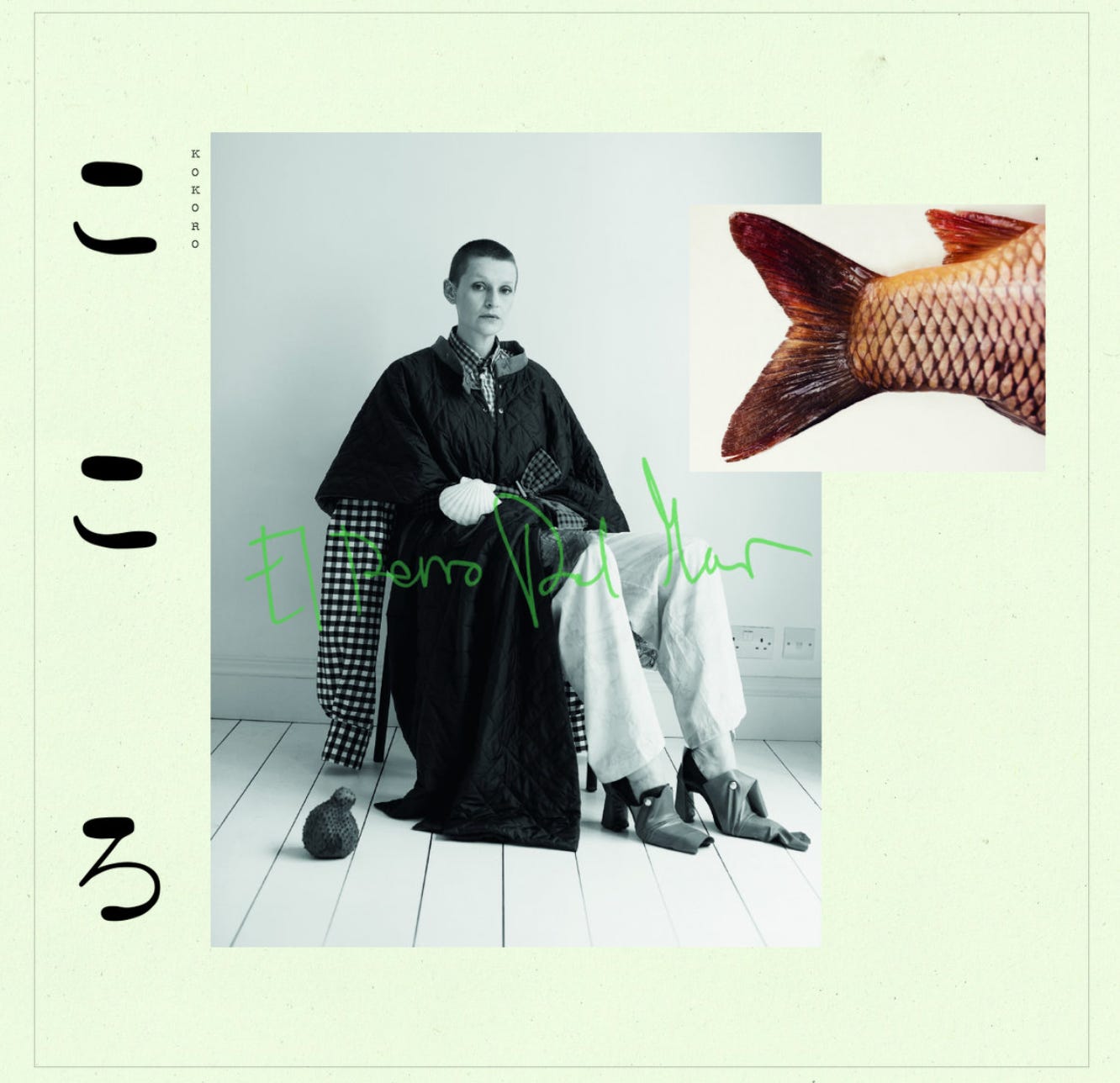
It was within this modern political environment of heightened cultural anxiety that Swedish songwriter Sarah Assbring – aka El Perro del Mar – boldly created her album KoKoro. The album’s premise was to continue her intimate and melancholic pop – inspired by lo-fi indie-pop, 60s girl groups, and soul – but to enhance it by constructing an album predominantly using non-Western instruments.
The intent was to create a borderless album, one that belonged to everywhere simultaneously. If pop music is the universal connector of humanity, then, Assbring believed, the creation of it should draw upon humanity’s vast array of musical styles and tools.
Of course, branching out from the traditional instruments used in Western pop is not new. George Harrison introduced the sitar into the Beatles’ music in the 1960s on Norwegian Wood. Not to be outdone, the Rolling Stones used the instrument to great effect on Paint It Black. This helped inspire the development of the electric sitar, a hybrid instrument that could be played more like a guitar. B.J Thomas, Steely Dan, and Led Zeppelin all embraced the instrument as providing a sound and feeling that the guitar couldn’t.
In the 1980s, Peter Gabriel sought to fuse what had become known as “world music” to the then-latest advances in electronic instruments to create a highly distinct pop sound. Then expanding this out of pop into Passion, his soundtrack to the film The Last Temptation of Christ. While Canada’s favourite punchline, The Tea Party, attempted to update Led Zeppelin for the 1990s with an array of different Middle Eastern and Indian instruments to augment their overwrought rock.
Yet what marks KoKoro as distinct is that it was made during an emerging period of intense cultural insularity, with its suspicion towards any kind of cross-cultural artistic expression. This suspicion masked itself through the mantra of “diversity” but in practice has advocated for the very opposite – an ethnic and cultural segregation that worked against humanity’s natural curiosity and desire for exchange. Within this climate, KoKoro was an act of courage; a refusal to let the demand for conformity restrain her creative imagination.
The starting point for Assbring was a visit with her son to a music museum that allows visitors to play instruments from around the world. This sowed the seeds for her to immerse herself in music from East and Southeast Asia, the Indian Subcontinent, the Middle East and East Africa. She then tracked down instruments that provided the sounds she liked – the Chinese guzheng, the Japanese shakuhachi flute, Arabic strings, the hammered dulcimer, and Indian tablas and Ethiopian kebero for rhythm.
Her aim was straightforward: to find a new way to write pop music, one with influences that felt genuinely fresh rather than familiar. Obviously, the structure of her songs, and her style of singing, is in the Western pop tradition, but the aim was to augment this with sounds that could ignite new feelings, and a broader sense of musical purpose.
This is how culture evolves. The artist who encounters an unfamiliar instrument is not simply adding colour to their palette, they are restructuring how they hear, how they feel, and ultimately how they think. The guzheng demands a different approach to melody than the guitar. While the shakuhachi’s historical relationship with Zen Buddhism carries with it a unique sense of calm and space. To utilise these instruments is to allow another culture’s way of feeling the world to pass through you.
Here Assbring is no different to the ancient traveller or trader before her. She was simply drawn to new ways to construct her songs out of the usefulness of discovering additional elements. It is both curiosity and necessity that are the parents of invention. At the time, the tools she already possessed had reached their limit, and so, like any practical explorer, she went looking for better ones.
This translated into the themes for the album’s song, with Assbring wanting to address the condition of the modern human being; the state of the world, its pressures and moral direction. The concept was to create an album with a universal voice, and this required building it from sounds that belonged to no single place.
Lyrically Breadandbutter is her most direct statement of universal solidarity, a push back against the tribalism and division that Assbring saw hardening around her. The song is an insistence on our shared humanity and the blunt realities of our common origins. While Clean Your Window is a confrontation with the insularity, narcissism and conformity of the modern social and political environment.
Our modern retreat into insularity has been a search for comfort, yet the outgrowth of this has been to actually make us less happy. Ging Ging interrogates this directly – its lyric “happiness, whatever it means, it’s not enough” captures the restlessness of a society that has material comfort but remains profoundly dissatisfied. Politics, and its social expressions, have become increasingly fixated on groups and grievances, stoking vulnerability and discontent among subcultural identities and emotionally insecure majorities alike. The result is a complaint-driven worldview that feeds anxiety rather than resolving it.
It is curiosity that offers us the path out of this mire. Curiosity builds our resilience. It opens us up to the world and helps us navigate it with confidence. To understand the world is not solely to locate opportunity within it, but it is also necessary to overcome the darker impulses within humanity that seek to divide and segregate.
What KoKoro exemplifies is a kind of apprenticeship to the world: a willingness to learn from the unfamiliar, and to allow that knowledge to build upon and ultimately transform one's work into something that could not have existed otherwise. Assbring did not raid these traditions for exotic decoration – she was doing what humans have always done, reaching across boundaries in a spirit of curiosity and exchange. This is the mechanism by which music, perhaps more than any other art form, has always evolved.
Each of our cultural traditions is actually a layering of influences accumulated over centuries. Cultures are processes, not possessions, they are not bounded and static, but ever-evolving. No culture's identity is diminished by this acknowledgement. It is simply an honest account of how human creativity has always moved – through contact, collaboration, and exchange.