

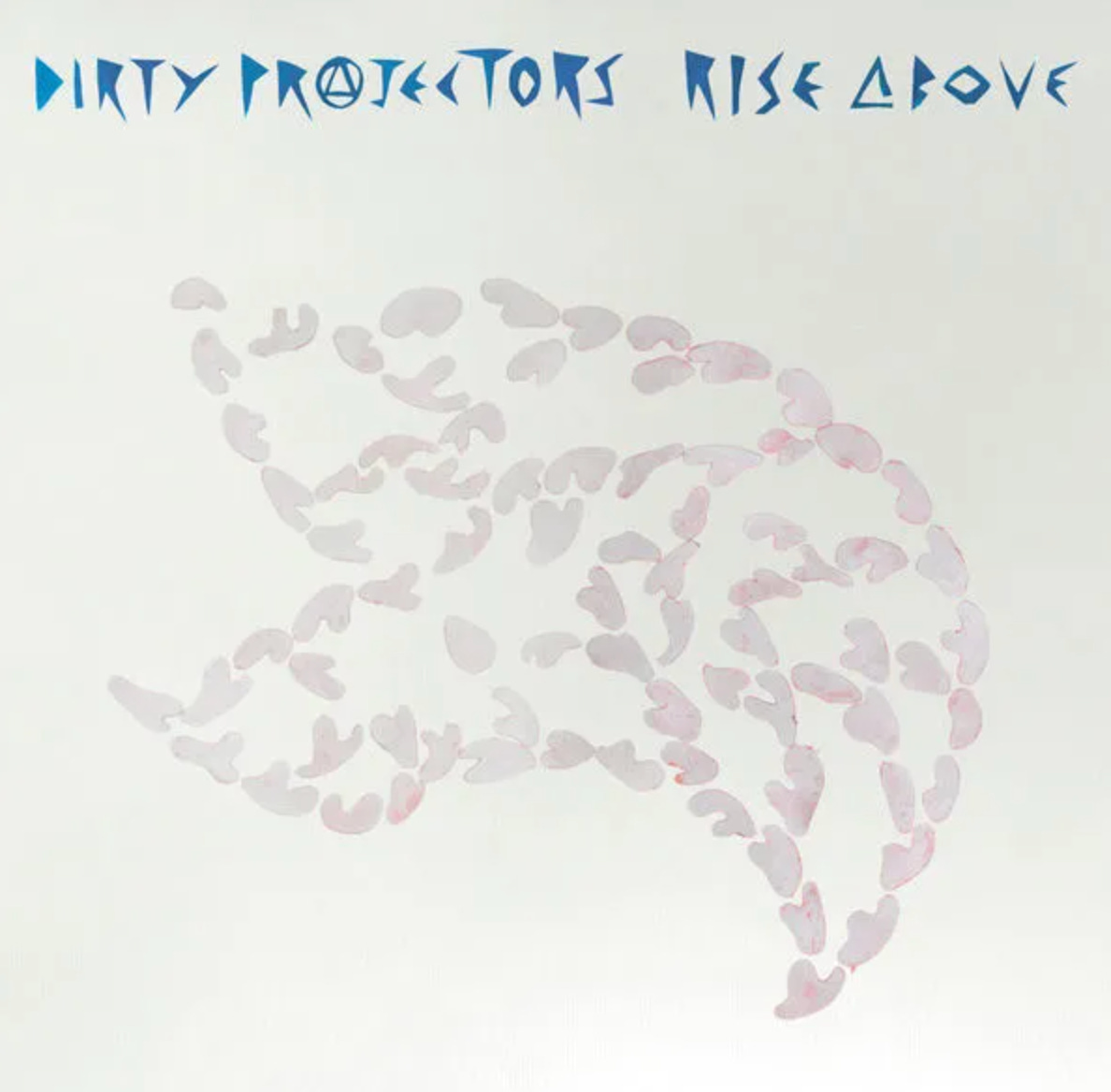
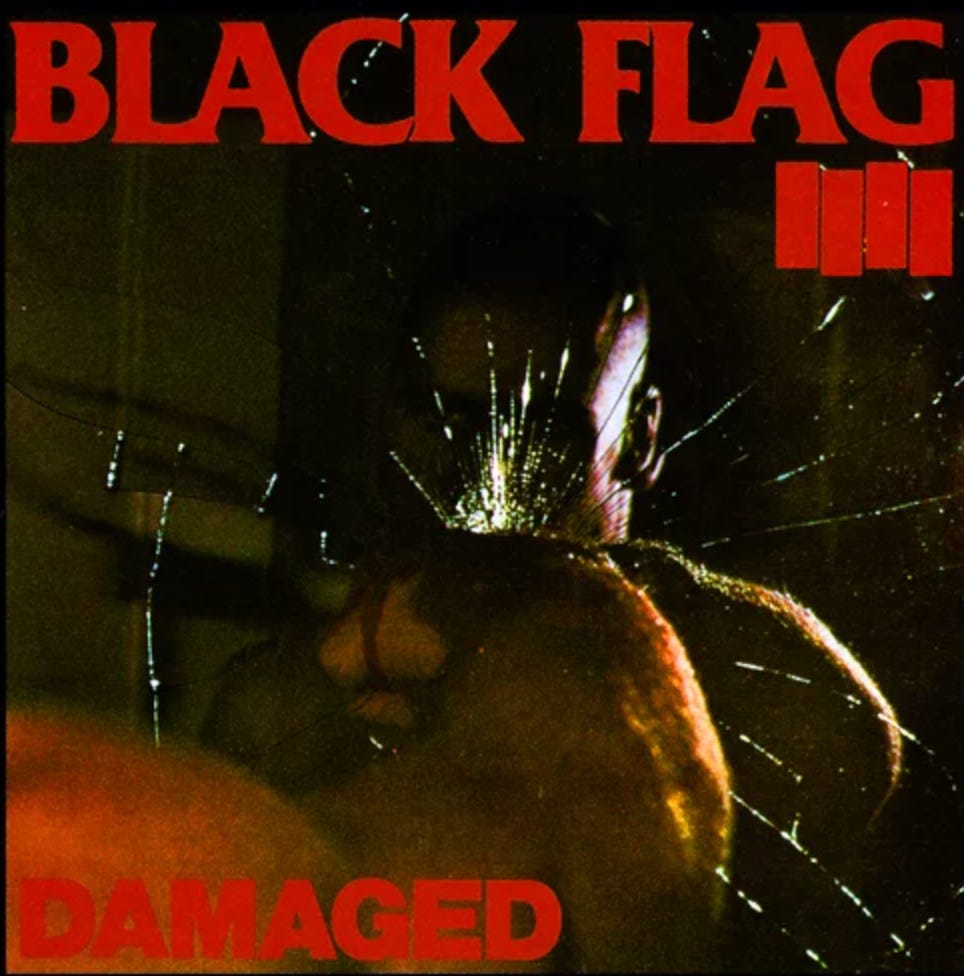
Rummaging through a cupboard at his parents house one day David Longstreth came across a cassette case of the Black Flag album Damaged. As often happens with such long-forgotten items, the actual cassette wasn’t inside. But this got him thinking. What if he could recreate the album from memory? And, what if memory was not a facsimile, but an evolving state of reinterpretation? Where in trying to remember something, a whole new formation of it emerges.
Released in 1981, Damaged was one of the defining and most influential albums of American hardcore punk. An album through which much of the subsequent punk and underground scenes defined themselves by. It is a ferocious and claustrophobic record constructed out of a powerful sense of alienation, resentment and frustration. Shaping these emotions into raw, hurtling and abrasive short stabs of energy.
Although mostly written by guitarist Greg Ginn, it is Henry Rollins’s voice that embodies these sentiments and convincingly transmits Damaged into something that sounds like a man who genuinely believes the world has been rigged against him. Institutions and authority are not sources of order but suffocating restraints; the promise of life – respect, dignity, belonging – appears available to others but not to him. Aggrieved desperation is the overarching theme.
The album is one of the most viscerally masculine records ever made. The riffs are fast, jagged, and relentless, the vocals are intense. Everything is turned up to 11 as it externalises an inner chaos – kicking hard against all and sundry. If the frustration on Damaged has a target, that target is existence itself. It is music that wants to smash things, anything, simply for the sake of release.
Yet for all its thrashing, Damaged is also a record of some self-awareness. The band is not simply raging blindly – the album’s power comes from its tension between inarticulate fury and sharp social perception. There’s a wry element to its lyrics. A song like Six Pack is very funny, even as it illustrates self-destructive behaviour.
While we may consider ourselves to currently be in an era of heightened male grievance, Damaged reveals that these emotional wounds inside masculinity are not timebound. The permanence of male grievance is due to an instinct that masculinity must be constantly “proven”, through work, social life, competition, and peer recognition. The loss or denial of these markers are not merely personal disappointments, they are interpreted as a lack of male legitimacy. Grievance then hardens into personal identity, creating spiky, agitated personality traits.
The album is built around a belief that there are social expectations placed on young men that present a path with no viable route. Beneath the aggression of the songs lies a deep insecurity – a fear that the goalposts are always shifting, and that no matter what a man does cannot meet these social expectations.
The narrative that weaves its way through the album is that these expectations themselves are fraudulent. That the whole damn system is designed to produce failure. Anger, then, becomes the only available form of agency – although this is not expressed as a political anger with a coherent direction, but instead a primal howl.
On Rise Above, Longstreth fashions this howl into something more complex. Given his self-imposed concept of working solely from memory, his faulty recollection becomes an opportunity to expand the album’s musical palette. The fast, aggressive, riffs of the original are instead transformed into music more multifaceted and often ornate.
The walls of distortion are replaced by intricate, fingerpicked guitar lines that draw on West African musical traditions – patterns that are constructed to alter and evolve over the course of the song, rather than simply repeating. This is complimented by the use of strings that create dramatic shifts in mood which are highly distinct from the original, replacing its kneejerk feistiness with a broader range of emotions and demeanours.
This is the first of three major stylistic shifts. The second is Longstreth’s own voice – his warbling, lawless, delivery is extreme in ways that is unorthodox for even alternative music – capable of moving from a near-whisper to a throat-tearing scream within a single line. It’s a different form of intensity to that of Rollins, but it makes moments of fury within the songs more dynamic because they often surfaces from music that is otherwise carefully controlled.
It is this careful construction that presents the album’s third stylistic shift and its most striking feature – the complex vocal harmonies of Amber Coffman and Susanna Waiche. These female vocals function as the most radical act of recontextualisation on the record, not only as a counterforce to Longstreth’s voice and the masculine rage of Black Flag’s lyrics, but by introducing an element that is so undeniably gorgeous. The rapid hocketing – where a single melody is split between two voices – underneath the verses of Gimmie Gimmie Gimmie is far outside the scope of punk.1
These sophisticated vocal arrangements are also at odds with the attitude of Damaged. While the lyrics remain more or less the same (or as well as Longstreth can remember them), the musical context around them has been so thoroughly transformed that the meaning they elicit creates a distinct change in what the album expresses about masculinity itself.
It doesn’t mock the frustration at the heart of Damaged, but proposes that the same pain might be carried differently. If the album is to make an argument, it is that masculinity’s instinct to constantly “prove” itself doesn’t need to be a whirlwind of fists and kicks.
Rise Above instead creates a more varied emotional palette. One of highs and lows, of active contemplation as well as frustrated release. On Police Story the contrast between the sparse and tranquil orchestral arrangement, and the abrupt stabs of acoustic guitar and Longstreth’s unhinged vocal delivery, creates this more of a varied setting. The burning hatred of the cops is still there, but it’s more reflective than confrontational.
The overarching sentiment is that beautiful, melancholic, and often unsettling music may be far more impactful than a boot to the face. Whereas Damaged exhausts itself with its own aggression, Rise Above creates a slower form of discontent. It takes the same raw material and creates a broader, more introspective, expression of male frustration. Where Rollins externalises, Longstreth internalises.
This more pensive tone aligns with the nature of the album itself as one constructed by memory. Due to this approach, Longstreth wasn’t working simply with Damaged itself, but the sediment it had left behind – the feelings and impressions of listening to the album as a teenager and then reconstituting these as an adult, with an adult’s wiser cognitive capabilities.
To reconceptualise Damaged like this required Longstreth to filter the album through everything he’d become since he first engaged with it. What emerged is a portrait of two moments simultaneously – the original experience and the expanded reflection of this experience. A document that morphs both nostalgia and frustration into something more mature and prudent.
Due reflection being central to the project, it was apt for Longstreth to rename the album after the one song on Damaged that does exhibit some contemplative maturity – Society's arms of control – rise above, we're gonna rise above.
The band uses this technique again in the song When The World Comes To An End, from the Mount Wittenberg Orca EP.