

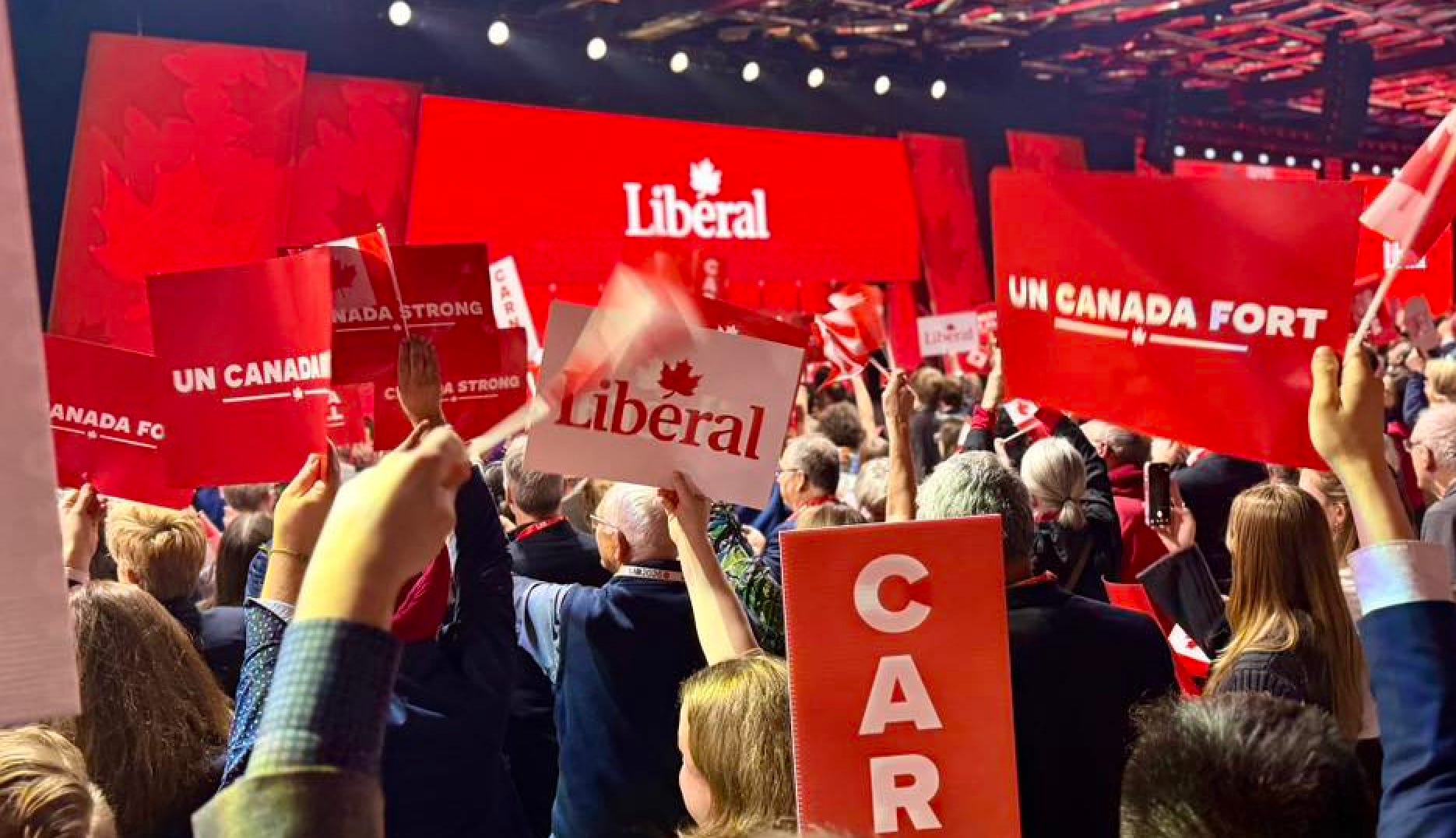
There are very few things in this world that excite me more than Canadian elections. The Sisyphean burden I carry through this life is to convince people that Canada is actually fascinating. No-one believes me, of course, because Canadians are very good at projecting an image to the world of being mundane and inconsequential. The New Republic once ran a campaign to find the most boring newspaper headline and the winner was “Worthwhile Canadian Initiative”.
However, this perspective is complete bullshit. Canada is a deeply complex and thoroughly weird society, and its domestic politics in particular is so relentlessly intriguing that were I confined to work on just one single issue for the rest of my life I would choose it. One could easily spend a decade or more thinking about the 1993 election alone.
Central to Canadian politics is the country’s permanent revolt against Duverger’s Law – that single member districts using a first-past-the-post voting system will naturally produce a two party system. Unlike their southern neighbours who live in total mental enslavement to Duverger, Canadians are a nation of cats with strong localised allegiances – and some often wacky ideas – which have historically led to a vast array of different political parties.
This has also created an environment where provincial politics bears no resemblance to federal politics, with unique parties that only run provincially, and parties that may have the same – or similar – names having no affiliation or organisational structure between them, either with a federal party or across provinces. The New Democratic Party (NDP) is the only party where their structure is like parties in Australia – with party branches federated under a national party organisation. Although the Alberta and Saskatchewan branches often do whatever they can to distance themselves from the federal leadership.
What makes Canadian politics even more fascinating is that – despite their reputation for being nice – the Canadian voter is one of the most ruthless bastards on the planet. Canada’s national sport is not ice hockey, it is murdering political parties. To Canadians, political parties serve a timebound purpose. When this time is up they are discarded like disposable nappies. Come October, this bloodlust looks set to reveal itself again in Quebec’s election, where after winning a massive majority of 90 seats out of 125 in the legislature in 2022, the Coalition Avenir Québec (CAQ) is currently projected to win precisely zero.1
The only party that has been able to survive this murderous streak has been the federal Liberal Party – being the sole political party that has maintained a continuous parliamentary presence since confederation in 1867. This is because the only bastards on the planet more ruthless than the Canadian voter is the Liberal Party. They are a party whose overwhelming priority is to win and who have developed into a Terminator-like machine that will mould itself to the times to make sure they win.
Understanding the Liberal Party’s current position requires recognising how the party adapts and learns from its mistakes. In the mid-2000s, emboldened by a decade of having no effective opposition, the party tried something radical. It reached down to Harvard University to ask Michael Ignatieff to run for political office – believing that someone with his intellectual weight could make a great prime minister. That Ignatieff hadn’t lived in Canada for 30 years wasn’t considered a significant problem.2
The merger of the Reform and Progressive Conservative parties in 2003 created a viable adversary to the Liberal Party, and under Stephen Harper the new Conservative Party of Canada managed to eke out a pair of short lived minority governments in 2006 and 2008. By this time Ignatieff had ascended to the leadership of the Liberal Party, yet what followed was an unmitigated disaster.
The rough and tumble of politics is a difficult game for intellectuals. Analytical brilliance can struggle against the speed, combativeness and essential emotional intelligence of retail politics. Igantieff was simply no match for Harper’s discipline and drive, and the warm public connection of the NDP’s Jack Layton. He led the party to its worst ever election result in 2011, the only time in Canadian history that the Liberal Party had not been either in government or the official opposition. Ignatieff’s subsequent book “Fire and Ashes” is a fascinating self-portrait of this political hubris.
The lesson the Liberal Party learned from this episode was stark. Not only that politics was no place for professors, but that the smartphone had completely reshaped the landscape of political communication – making it highly visual and performative. This required a striking transition of party leadership, from the Philosopher King to the Instagram King. In 2015, it catapulted them from third-party status to a majority government.
Despite steadily decreasing in popularity, Justin Trudeau managed to hold onto the prime ministership for a decade, albeit with subsequent minority governments. This was mostly due to the structural advantages the Liberal Party has, with the Conservative Party remaining a regional party masquerading as national party, and the NDP having an odd status in regularly being able to win provincial elections, but no-one trusts them to govern federally.
Yet by mid-late 2024, Trudeau had run out of likes, and the party were facing the murderous wrath of the Canadian voter – with polling suggesting that it was heading for a wipeout greater than 2011, potentially reducing it to fourth party status.
Despite Canadian voters’ fondness for knives, political parties in Canada are not as enthusiastic about stabbing prime ministers as their cousins in Australia. However, conditions had changed so dramatically that extraordinary measures were called for. Although rather than the shirts off partyroom brawls of Canberra, Trudeau was politely pushed into resigning.
The necessity of this change was not solely due to Trudeau’s decreasing follower count, but by the return to Donald Trump the White House – this time more emboldened and aggressive. The party needed to find someone who could be far more adept at handling the hostility of its neighbour, and also chart a new national course under dramatically altered international conditions.
In Mark Carney they found a new leader with an intimate understanding of the world’s economy from his previous positions as governors of both the Bank of Canada and Bank of England, and, what revealed itself later as a broader theory about geopolitics and how middle powers like Canada can navigate a more turbulent world.
While Trump has posed a significant threat to Canada, he was a lifeline to the Liberal Party. It would be fair to say alongside seeing Trump as creating a national crisis – ever the opportunists – the Liberal Party have also seen his bloviating and hostility as a golden path to consolidating their own power.
Although the Conservative Party has done well to convince much of populous Ontario that its interests are tied to the interests of the resource-extracting provinces to its west, the party now faces another major structural hurdle in that a significant portion of its supporters are more emotionally bound to Donald Trump than they are to Canada. Current Conservative leader, Pierre Poilievre, has struggled to find the tone and political positions to overcome this reality.
This has allowed the Liberal Party to own patriotism at a time when patriotism has become a national imperative. It worked to transform the party from certain defeat into another government. But the party hasn’t stopped there, this call to patriotism has also allowed the party to exert a new level of dominance of Canada’s political system through cunning and guile.
As long as the Bloc Québécois continues to win a large chunk of seats in the country’s second largest province, it is incredibly difficult to form a majority in the House of Commons. There have only been three majority governments this century (from nine elections). Despite the Liberal Party successfully framing the 2025 election as a national emergency that required a strong government, it still fell three seats short of a majority.
But in a Westminster parliamentary system seats belong to individuals, not parties, and this has presented the Liberals with an opportunity. Rather than seek a majority through calling an early election, the party has simply decided to poach MPs from other parties. Since November, five MPs have crossed the floor to become Liberal Party members – four from the Conservative Party and one from the NDP. Each of these defections have framed their actions as being part of a “mission” to help Canada during a period of national uncertainty. It is expected that more will follow.
However, until by-elections held on Monday the Liberal Party didn’t quite have its majority because three seats had become vacant since the election – and it also loses a seat to create a Speaker. Two Liberal MPs had resigned – Bill Blair to become High Commissioner to the United Kingdom, and Chrystia Freeland to become Special Representative for the Reconstruction of Ukraine and the Warden of the Rhodes Trust (the dispenser of Rhodes Scholarships).
These two seats – Scarborough Southwest and University-Rosedale, both in Ontario – are among the safest Liberal seats in the country, and so Monday’s by-elections were easy wins. This gave the Liberals their majority, but in order to exert further psychological dominance they were hoping for a sweep of all three.
The third seat – Terrebonne in Quebec – was more complex. This seat required a by-election because of an odd administrative error that had led to the annulment of the result from 2025 by the Supreme Court.
Initially at the 2025 election the seat was declared to be won by the Liberal candidate by a single vote from the Bloc Québécois candidate. Yet it was subsequently discovered that Elections Canada had accidentally printed the wrong postcode on the return envelope of a postal vote, and a woman who attempted to vote for the Bloc Québécois had her vote returned to her – and returned too late to resubmit. The Supreme Court therefore had no option but to annul the result.
Given that Terrebonne has been held by the Bloc Québécois since the party’s formation in 1993, a win for the Liberals would be seen as a strong endorsement of the government, and also important to try and shift some people away from separatist sentiment with October’s Quebec election on the horizon and the Parti Québécois currently leading in the polls. The Liberal candidate won by 714 votes.
In his book Big Tent Politics: The Liberal Party’s Long Mastery of Canada’s Public Life the political scientist Kenneth Carty argues that the party’s ideological flexibility, ability to adapt to change, and its “brokerage” style of politics has been the key to its success. The party has positioned itself as a mediator between groups, initially between Anglophones and Francophones, Protestants and Catholics, and working class and economic elites, and then subsequently as the party that could facilitate the integration of Canada’s multicultural communities.
The party may have failed with its brokerage in Alberta and Saskatchewan since the 1950s – where it is factio non grata – but with its bulwarks in Toronto and Montreal it is able to offset these losses. When the Canadian public does push the party into opposition it is doing so in order to ask the party to renew itself, and the party is adept and learning these lessons and adjusting itself accordingly.
There are few parties in the world that have so successfully made their own interests and the national interests to be perceived as one and the same. This makes the Liberal Party an object of intense hatred for those who have been left outside their big tent, but equally in times of national crisis the party are easily able to position themselves as the natural custodians of national unity and sovereignty. They have been able to project themselves a safe pair of hands, while simultaneously having the ruthless cunning to out-manoeuvre and outlast any other party that seeks to challenge them.
The party just installed a new leader (and premier) this week, so their fortunes may turn around, but it seems unlikely.
“Michael Ignatieff: Just Visiting” – became the Conservative Party’s easiest political attack line.