

In August 2022, I was in the Latvian capital of Riga when the government decided to demolish a 79-metre Soviet-era obelisk. The obelisk’s official name was “Monument to the Liberators of Soviet Latvia and Riga from the German Fascist Invaders”, highlighting the turbulence of Latvia’s position in the 1940s – first occupied by the USSR, then Nazi Germany, then recaptured by the Soviets. To the modern-day Latvians the obelisk was a humiliation, a symbol of Latvia’s precarious position wedged between great and predatory powers. For the country’s national pride, and for it to exert an independent spirit, the obelisk had to be destroyed.
Following Russia’s full-scale invasion of Ukraine in February 2022 a revolutionary atmosphere had emerged in the Baltic Sea region. Not an atmosphere of fervour or unrest, but instead a revolution of the mind – a sense of clarity and resolve about the return of war to the neighbourhood and its implications. No ideological distractions, no whataboutery with the United States, no bullshit about NATO expansion, just the cold, harsh, reality that Russia is a permanently belligerent state, regardless of the regime that governs it.
Since 2022, I have spent much of my time living in Sweden. This has afforded me the ability to travel around the Baltic Sea region and write about what I find – from jumping on its ferries, to catching trains through Estonia, Latvia and Lithuania, Germany and Denmark, and developing a strong fascination and attachment to Finland – its defence thinking, policy shifts, and the unique status of the Åland Islands.
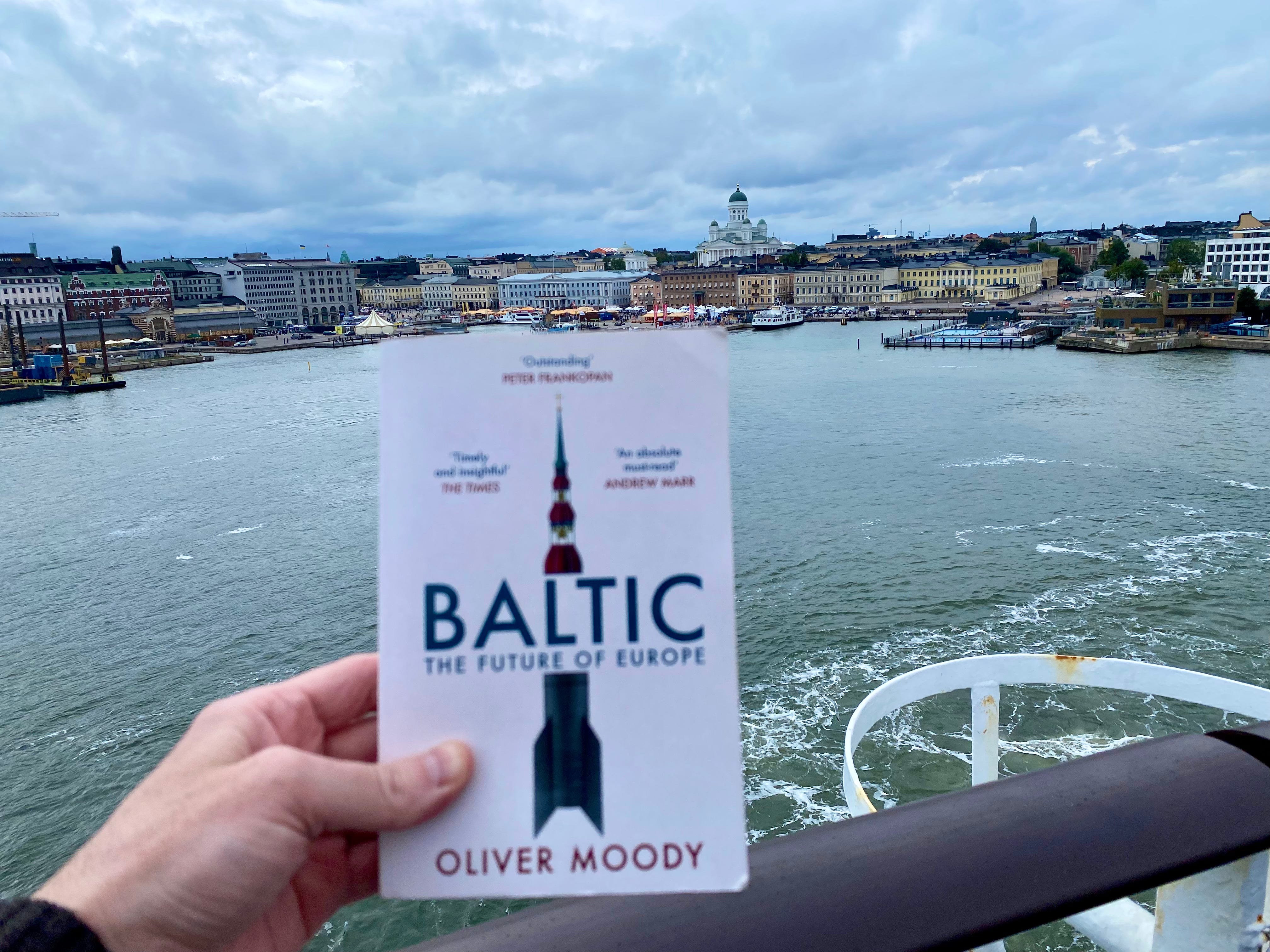
Each article I write has the looming shadow of Russia’s invasion of Ukraine cast over it. This Russian shadow is, of course, not new, but after a brief period following the collapse of the Soviet Union there was a hope that peaceful co-existence with Russia was possible. This now seems naïve. These are now, once again, “interesting times” for Europe, and interest in these times led me to purchase Oliver Moody’s book Baltic – an exploration of the Baltic Sea region’s history and contemporary politics, and how it has become one of the central theatres of modern geopolitics.
Always enjoying a concept, I thought - what if I read the book while travelling through the region? I had limited time, as I needed to get to Stockholm for election night, so I plotted a course where I could stop in Lithuania for a few days as I had a couple of article ideas to research, but otherwise make a mad dash from Poland, through the Baltics, up to Helsinki and then across to Stockholm, by bus, train and ferry – the kind of adventure I love.
Given the nature of Europe, despite living in Sweden, Copenhagen is my nearest airport. So I flew from the Danish capital into the port city of Gdańsk. Despite being Poland’s fifth largest city, Gdańsk played an outsized role in Poland’s recent history as it was within the city’s shipyards that the Solidarity political movement that broke the Communist Party’s monopoly on power began.
Gdańsk was also a “free city” in the inter-war period – neither German nor Polish, but a semi-autonomous city-state sitting between the two. This has given the city a distinct civic identity shaped by a resistance to imposed authority. As Moody notes, current Polish prime minister, Donald Tusk – a son of Gdańsk – tries to channel this mindset into a wider Polish conception of itself as an open, pluralist, European country, firmly resistant to authoritarian pressures (with a recognition that these authoritarian pressures are also internal).
However, upon landing in the city, the big European story was the state election in Germany’s Saxony-Anhalt region, with the radical nationalist party, the Alternative für Deutschland gaining just short of 44% of the vote to become overwhelmingly the largest party in the Landtag. The central principle in German politics over the past decade has been the brandmauer, or firewall (also known as the cordon sanitaire), where given the nature of the AfD, all other parties refuse to cooperate with them. But keeping the AfD out of power in Saxony-Anhalt now looks difficult.
Aside from Russia, the AfD is the other shadow looming over Europe, and one that creates an enormous complication to Germany’s Zeitenwende – or “turning of the times”. Announced by former chancellor Olaf Scholz, Zeitenwende is meant to be a reassessment of Germany’s long-standing assumptions about security and foreign policy. The country has been reluctant to exert its power following its atrocities in World War II as it remains psychologically scarred by its actions. Berlin has purposely weakened itself as a display of good faith. However, the current global environment means Germany can no longer withdraw from the world, it needs to now stand up and be a responsible actor.
The AfD believes that Germany should no longer carry any guilt for its Nazi past, but this does not mean the AfD sees Germany as a leading liberal-democratic force within Europe. The party is quite explicitly pro-Russian. It has an ideological affinity with Putin’s Russia, sharing a rejection of universalist values, liberal internationalism and supranational institutions. It believes that Moscow should be able to determine, or heavily constrain, the strategic choices of the states on its borders, subordinating the security – or existence – of these countries to Russia’s whims.
The authoritarian receptors remain pronounced in the former East Germany, and the AfD has been able to capitalise on this. The living memory of the region’s integration with the Soviet-led bloc, and the propaganda that sustained it, means there is a continued sympathy for Moscow. The reassembly of Germany has not been complete – and has intersected with the uneven effects of globalisation – with the AfD seeing this as an enormous opportunity to exploit.
Like other similar nationalist parties – although more dangerous than most – the AfD wraps itself in the German flag as a form of subterfuge, attempting to sell itself as “patriots” while being actively hostile to Germany’s constitution, its alliances, its interests, and demographic realities. The party’s increasing political power is the elephant in the European room – a Germany of the past threatening to consume the Germany of the present.
Moody details this “identity crisis” within Germany. Europe’s largest state by population, the world’s third largest economy, and an advanced manufacturing powerhouse, it should have a major leadership role within the continent. Scholz himself stated that Germany would become “the guarantor of European security that our allies expect us to be”. Yet it remains, as Moody describes it, a “republic of fear” – constantly questioning its role in the world.
Germany’s support for Ukraine is large in absolute terms, but it has also been hesitant and indecisive about this support. Whereas Poland and the Baltic states have understood the stakes clearly, Germany can’t quite bring itself to fully abandon the assumptions of its old order. Zeitenwende has, instead, been a partial turn – or, indeed, one that much of the German public is reluctant, or hostile, to making.
There is no such quivering in Poland. The country had firmly decided that it will no longer be the plaything of authoritarian powers. With defence expenditure at around 5% of GDP – over double the larger European countries in Germany, France and the United Kingdom – Poland, as Moody notes, now “regards itself as a resurgent regional power whose interests, history and civilisational values give it a special responsibility to defend the frontiers of Europe against Moscow’s designs.”
Despite its own internal populist revolt, the Law and Justice Party (PiS) has no sympathy for Russia, and while in government when Russia began its full-scale invasion of Ukraine in 2022 it embarked on an extraordinary programme of arms purchases from the United States and South Korea. Moody highlights that Poland now has more tanks than Germany and France combined.
Having visited Poland numerous times over the past few years, the idea of the country housing “civilisation values” that elicit a strong national pride has become apparent to me through its architecture – with Gothic, Renaissance and Baroque styles all prominent. Kraków, spared much of the violence of the Second World War, is a truly gorgeous city, and the riverside setting of Gdańsk’s old town is equally stunning.
However, passing underneath the central railway station in Gdańsk, you find yourself confronted with something rather bleaker – the architecture of its 20th Century subjugation. Poland has spent much of the past three decades renovating, redeveloping and demolishing its Communist-era buildings that sit alongside the country’s traditional city quarters. But this process has not yet reached the 1973-built Gdańsk bus station, which remains a dank brutalist blight.
I was there because there is no direct train from Gdańsk to Vilnius, so I jumped on the Brat-green Flixbus – the Ryanair of buses – for the ten-hour drive to the Lithuanian capital. Being Australian, a ten-hour drive is unremarkable, but in Europe it feels considerable. Poland is a large country, yet significantly smaller than it was prior to World War II. It lost territory to Belarus, Ukraine and Lithuania, although gained some from Germany. Its historically fluid borders – and the instability borne from this – has also driven its current defensive determination.
Traversing Poland’s northern regions from west to east, it is noticeable how lush the country’s countryside is, and unsurprising that it is one of the European Union’s largest agricultural producers. But also noticeable is the increased military presence around the Suwałki Corridor – the small strip of land that connects Poland to Lithuania in between the Russian exclave of Kaliningrad and the Russian puppet-state of Belarus. It is one of Europe’s most strategically sensitive areas with the potential to disconnect the Baltic states from the rest of the continent. The Poles are taking no chances.
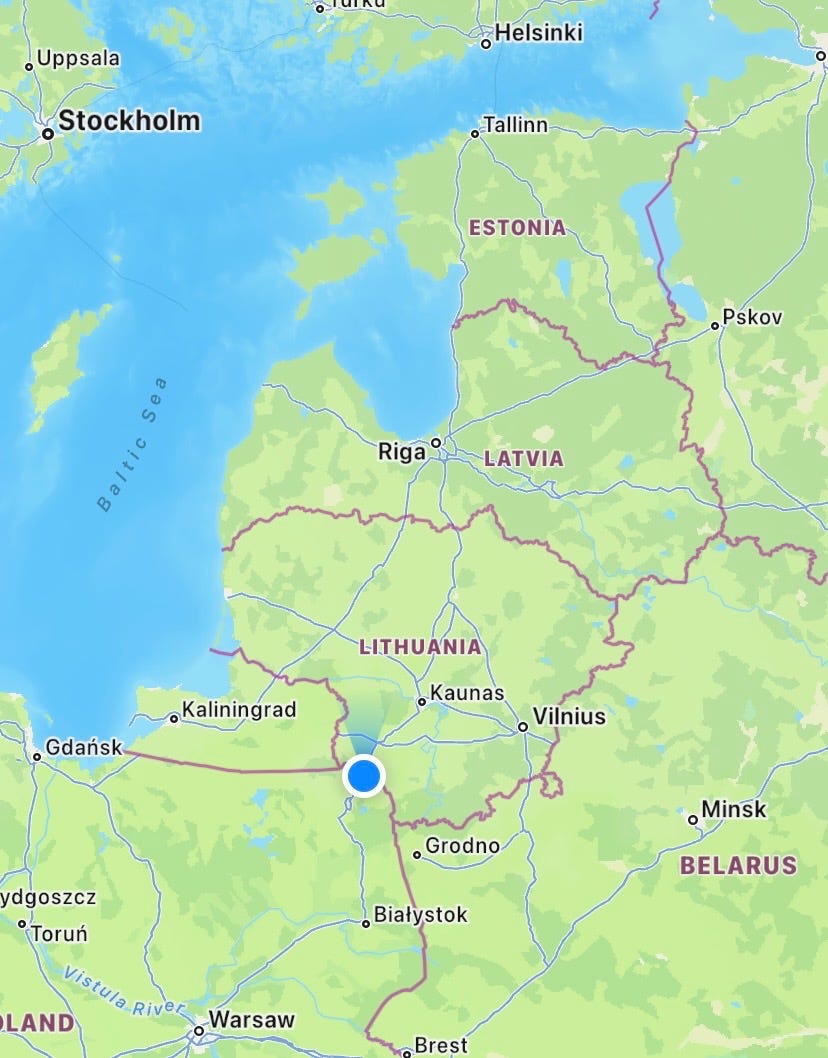
As is the norm within the Schengen Area, the bus passes into Lithuania without acknowledgement. Only by noticing a shift from the consonant-heavy Polish to the vowel-heavy Lithuanian on the road signs would you realise that you’ve entered a new country. Despite sitting all day, long bus trips are exhausting. Pulling into the Vilnius bus station in the dark, the task was simply to walk the 20 minutes to my accommodation and get to bed.
Moody’s chapter on Lithuania begins with a scene from 1940, when the Lithuanian deputy prime minister, Vincas Krėvė-Mickevičius, is ushered into a room with the Soviet foreign minister Vyacheslav Molotov. Lithuania had already been bullied into having 20,000 Soviet troops stationed on its territory, but Molotov’s intentions were now being laid bare, telling the deputy PM to face reality and that “smaller nations will have to disappear”, and that the Soviet system “shall reign everywhere”.
Yet as Moody acknowledges, it wasn’t just the rapacious ideological hunger of the Soviet Union that saw Lithuania this way. During the period between the two world wars, most Western diplomats also saw the Baltic states as unviable and provocative in their attempts at national self-determination. For 50 years this subjugated status was deemed both normal and inconsequential. But since 1989, Lithuania has been determined to make it unrepeatable, and themselves highly consequential.
My idea for spending a few days in Vilnius was to write an essay about courage as a foreign policy tool. Coming from a country with a timid national demeanour, and being endlessly frustrated by this, the bravery and fortitude of countries like Lithuania is something that intrigues me. I reached out to the Foreign Ministry to see if I could have a discussion, but my plans were thwarted by Kaja Kallas, the former Estonian PM and the current EU High Representative for Foreign Affairs and Security Policy, being in town and the ministry being stretched thin with arrangements.
What they offered as compensation was rather flattering for a lowly scribbler such as myself. Lithuania’s new ambassador to Australia, Donatas Buktus, was in Vilnius and offered to take me out to dinner. He was only a few weeks into the job, and was about to make his way back to Canberra. Buktus’s previous role was as deputy ambassador to Ukraine, so his new job will be a little less eventful – and I’m not sure whether Canberra is a reward or a punishment. Given his last post, we went to a Ukrainian restaurant, drank horseradish schnapps, ate beetroot and veal soup, and discussed Lithuanian, Australian and global affairs.
The ambassador was also able to organise for me to visit the National Crisis Management Centre, where much of the Lithuanian response to Russia’s recent aggression is coordinated from. The Centre has eyes on Russian troop and aircraft movements in the region, but is also tasked with responding to the relentless disinformation campaigns, and greyzone tactics that Moscow deploys against Lithuania.
Yet Russia hasn’t been the only authoritarian state that Lithuania has had problems with recently. Due to the geopolitical realities of only being able to recognise one China, Taiwan (which is officially the Republic of China) has to call its overseas diplomatic missions the Taipei Economic and Cultural Office. The Lithuanians, however, now being disinclined to eat authoritarian shit, had decided not to submit themselves to this convention and allowed the mission to be called the Taiwan Representative Office. This, of course, sent Beijing ballistic.
Being a friend of Taiwan, and impressed by the Lithuanians, I thought I should stick my nose into the situation and pay the Taiwan Representative Office a visit. The question I had on my mind was why would Taiwan, with its limited diplomatic resources, set up an office in Vilnius? The reason, I discovered, was that the Lithuanians have developed a highly sophisticated laser industry, and these lasers are vital to the production of Taiwan’s semiconductors.
Moody describes Lithuania allowing Taiwan to name its mission the Taiwan Representative Office an act of “unilateral bravery”. It was this, but it was also an act of economic reality. Although China is a major export destination for Lithuanian laser technology (amongst other products), the potential to integrate its laser capabilities into the cutting edge of the semiconductor industry lies with Taiwan. Enraging China was therefore worth the risk.
It is this appetite for risk that could be considered the national ethos of Lithuania, what Moody describes as that of a “rebel nation”. Despite its subjugation to the Russian Empire, Poland, and then the Soviet Union, Lithuanians have always maintained a strong spirit of resistance and commitment to their right to nationhood. Even with its overwhelming military superiority, it took the Soviet Union a decade to subdue the Lithuanian resistance known as the Forest Brothers.
In 1949, the Forest Brothers adopted a declaration asserting their own political authority over occupied Lithuania, and established an idea of Lithuanian sovereignty that lives on today. As Moody highlights: “The idea that the state could live on through partisan fighters even after its structures were destroyed by a foreign invader has a formal place in the modern Lithuanian constitution”. Lithuania’s Law on the Basics of National Security, adopted in 1996, goes further. It establishes a principle of total and unconditional defence, expressly including guerrilla warfare, civil disobedience and non-collaboration.
The Lithuanians firmly believe the blunt opposite of what Molotov and Western diplomats in the 1940s believed – that smaller nations would inevitably be eradicated. Moody acknowledges “how little success the Soviets subsequently had in their efforts to grind down Lithuanian identity”. Like Estonia and Latvia, Lithuania was “subjected to a wholesale social engineering”, yet this merely had the countereffect of heightening their spirit of resistance.
The spirit has now been transposed on the current era’s display of Russian belligerence. All three of the Baltic states have proved to be the most resolute in their support for Ukraine. Their governments have been among the loudest voices in Brussels and Washington pushing for tougher sanctions and faster weapons deliveries, driven by a conviction that Ukraine’s fight is, in essence, their own – recognising that Moscow sees the Baltics in the same way as Ukraine; as countries that have no right to exist.
After wrapping up my engagements in Vilnius, I jumped on a train to Riga. The train is a relatively new service connecting what was previously a highly fragmented regional network. The connection is a precursor to the Rail Baltica project, which will be a high-speed train from Tallinn in Estonia through Latvia and Lithuania and connecting into the European train network in Warsaw – something that isn’t currently possible due to different rail gauges used from Poland westwards.
In 2024, I wrote a piece for Foreign Policy magazine about this under-construction train line and its political symbolism while attempting to make my way through the region via the existing network. At the time there was no coordination of timetables, so a train from Tallinn to Riga would require a four hour wait at the border town of Valga. However, now this is no longer the case. I can’t be certain that my article inspired the coordination of timetables, but I’m keen to take the credit regardless.
The train from Vilnius that I was on now travels all the way through to Valga where an Estonian train waits to collect passengers. However, I wanted to spend some time in Riga, and would make the journey to Tallinn the following day – taking the old Soviet-era Latvian diesel chugger, made in Ukraine’s Donbas region, to Valga, before switching to the sleek, new, Swiss-made electric Estonian train.
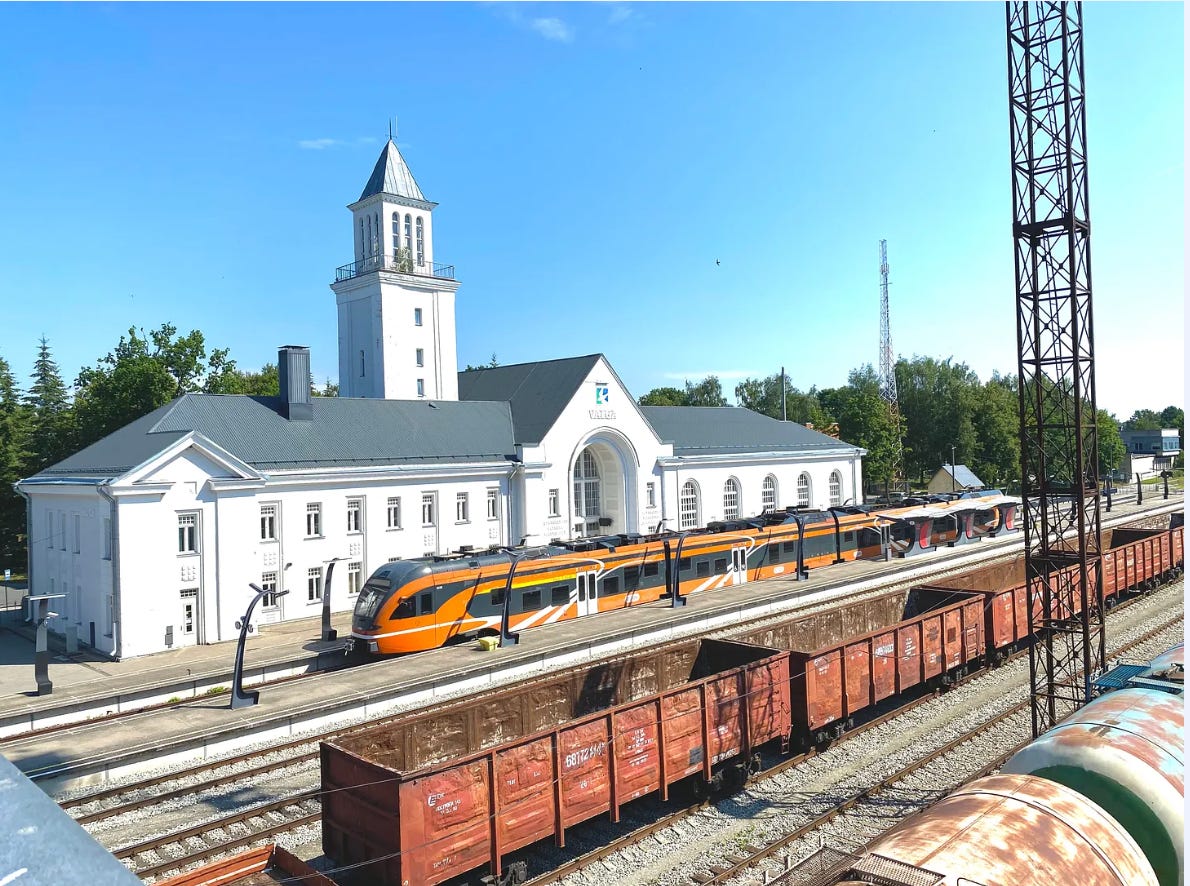
The trains here are symbolic of each country’s capabilities. Latvia has lagged somewhat behind Lithuania and Estonia in the Baltics’ remarkable economic ascent since the fall of the Soviet Union. While Lithuania has its new glittering new skyscrapers, and Estonia has bounded into become a high income country, Latvia still has a little dirt under its fingernails. Riga feels like it’s still waiting for a post-Soviet paint job, and its retro trams and trolleybuses give the city a decidedly Eastern Bloc feel.
This atmosphere is exacerbated by Russian remaining the largest spoken language in Riga. This continues to be one of the most contentious issues in Latvia today. During their occupation, the Soviet Union deliberately sought to transform the demographics of Latvia and Estonia by bringing in large numbers of Russian workers. Latvia now grapples with how it navigates its demographic realities and the supposed sympathy towards the country’s greatest threat this creates.
Since Russia’s invasion of Ukraine, Latvia has accelerated laws aimed at reducing the role of Russian in public life. It has legislated to move schools to Latvian-language education, ended Russian as an option for learning a second foreign language in schools (after English), and tightened residence requirements for some Russian citizens, including requiring Latvian-language proficiency for permanent residence. The aim is to consolidate Latvian as the common language of public life and weaken the parallel Russian-speaking sphere that developed under Soviet rule.
Where this becomes murky is in how the Soviet past, the current Russian aggression and merely speaking Russian get blurred together. The destruction of the obelisk in Riga in 2022 was part of what Moody describes as “a systemic campaign by the Latvian state to erase almost every visible trace of communist oppression from its landscape” – with Russia’s current aggression interpreted as the same thing. The problem is that over three quarters of Russian-speakers in Latvia viewed the obelisk as simply a symbol of Russophone identity, rather than one of Latvian subjugation. The obelisk clearly couldn’t stay, but destroying it may also have pushed Russian speakers further towards Moscow – something Putin is keen to exploit.
However, Latvia may be less divided than it seems, as it is also obvious that the country now provides access and opportunity for its citizens that Russia cannot. Moody quotes the former Latvian prime minister, Evika Siliņa, who states bluntly “the younger generation can choose: either they want to be with the Russians, or they want to be part of Europe. And they mostly want to be part of Europe.”
The reason I had initially started spending time in the Baltic region was due to both an Australian and familial connection. Following World War II the Australian government assessed its strategic landscape and concluded that it simply didn’t have enough people to defend itself. The policy borne from this conclusion was called Populate or Perish, but it faced a cultural hurdle. Australia was an insular and timid country, still very bound to the idea that it was simply a British outpost in the Pacific. Selling the country on immigration was going to be tough.
The immigration minister at the time, Arthur Calwell, devised a plan so hilariously simple, and an idea so completely of its time, that it was cunning in its genius. Calwell thought that if the Australian government was able to find a cohort of good looking people and have them be the first wave of new migrants to Australia, then Australians would think the immigration was an excellent idea. So officials were sent to the post-war refugee camps of northern Europe to round up hot people. This wave of migrants were called the “Beautiful Balts”.
While single, young, healthy adults were deliberately prioritised, some families were also selected, and on one of the first boats to arrive there were two young Estonian children. The pair grew up and married each other, and then their son subsequently married my sister. So with Estonia drawn into the family, I became drawn into Estonia. Fortunately, Estonia is a very easy place to become fascinated by.
Despite being grouped with Latvia and Lithuania as “the Baltics” Estonia is highly distinct. It is not a Slavic nation but a Finnic one. Linguistically Estonian and Finnish are closely related, and are distantly related to Hungarian. All three, however, are completely unrelated to any other European language, having initially developed in the Ural mountains that separate eastern Russia from Siberia. Although the Hungarians were late arrivals, trailing the Finnic peoples’ move to Europe by about 2,500 years.
What is noticeable as you leave Valga station and make the journey towards Tallinn is how distinct the architecture in Estonia is from its southern neighbours. There is a strong Nordic feel, derived from both its close ethno-linguistic and cultural relationship to Finland, and both countries’ long histories as part of the Swedish Empire (150 years for Estonia, and 600 years for Finland). This Nordic sensibility was actively maintained during the Soviet era, where architecture could provide a subtle way of preserving a distinct cultural identity without raising Moscow’s ire.
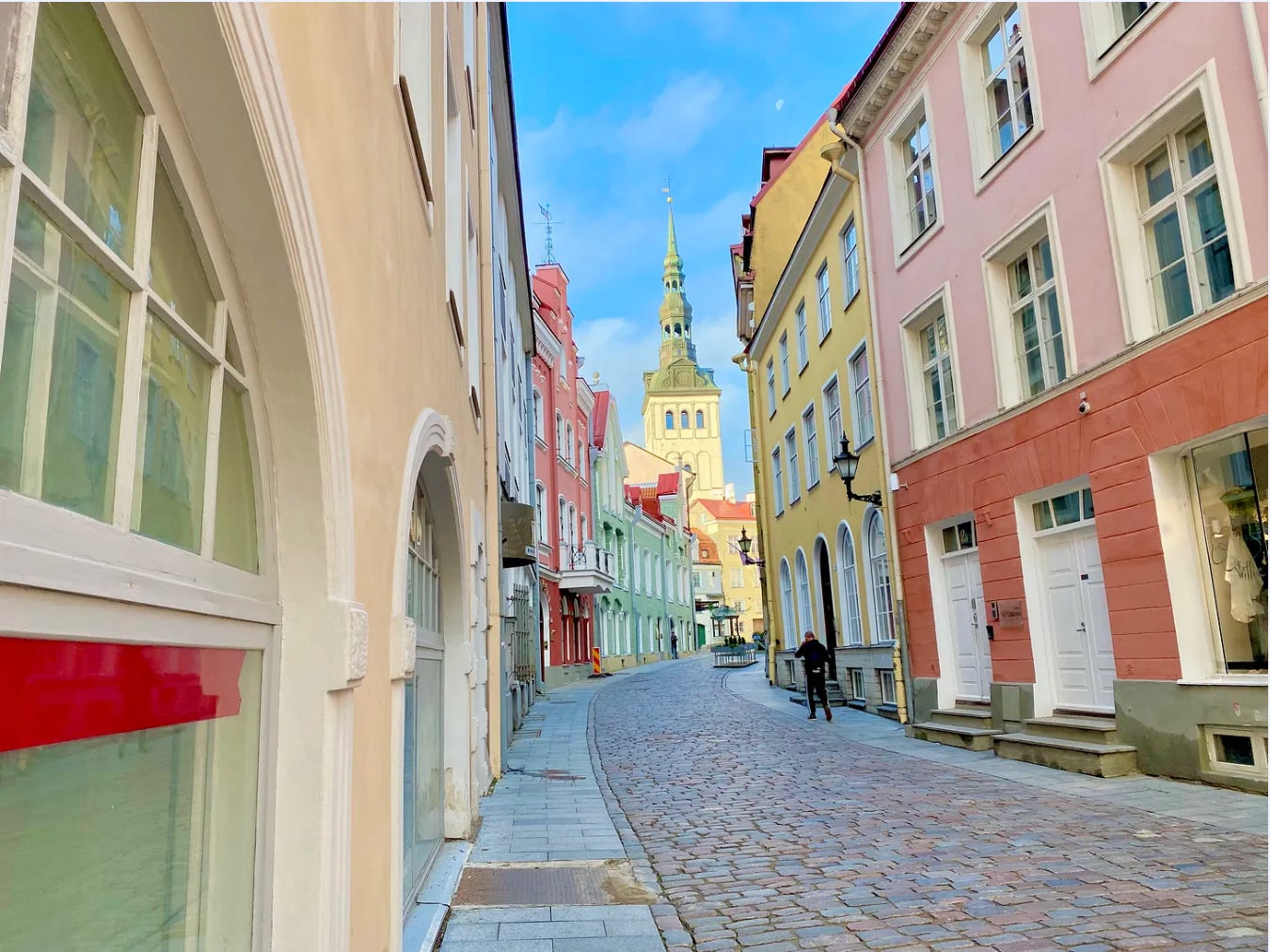
What is also noticeable in Estonia is its economic transformation. Moody declares that “since it restored its independence in 1991, Estonia has raised its nominal GDP per capita 2,500 per cent”. He notes that it has built the best schools on the continent, rapidly increased its score on the Human Development Index, and, despite a culture of graft and corruption that exists in most former Eastern Bloc countries, Estonia now ranks alongside Canada in its government transparency. It has also developed a technology sector which a country like Australia, with a far longer period of prosperity, would be envious of.
Moody quotes former Estonia president Toomas Hendrik Ilves in stating that Estonia would like to become nothing more than another “boring Nordic country”. Yet the tragedy of its geography has made this difficult. Like Latvia, the early 1940s saw Estonia occupied by the Soviet Union, then Nazi Germany, and then the Soviets again. The dry Estonian humour encapsulated their predicament in the maxim: first hunger, then misery. Like their neighbours the determination to never allow this to happen again is now central to their being.
During the 20th Century the country maintained its belief that it would regain self-determination. Moody details how during the Soviet occupation, the Estonians engaged in an extraordinary form of cultural preservation. As the intense wave of “Sovietisation” sought to repress or eradicate Estonian identity, the public simply hid the nation’s important monuments and artefacts. The historian Mart Laar explains that “Under occupation it seems understandable that people could hide gold, weapons, even books, but risking everything to hide huge stone or bronze monuments appears absolutely implausible. But that is exactly what Estonians did.”
What also sustained the Estonians was the ability to pick up Finnish television and radio broadcasts. Initially faint signals were receivable, but in 1971 the Finnish public broadcaster, Yle, constructed a new transmitter that significantly increased reception into Estonian homes. Although Finnish and Estonian are not mutually intelligible in every context, many Estonians could understand enough Finnish to follow the broadcasts. It enabled the Estonians to see the world beyond Soviet propaganda.
What drives the connection today is the ferry service between Tallinn and Helsinki. However, the ferry to Helsinki leaves at the disrespectful time of 7am. So after a brief stopover in Tallinn I was up before dawn to make my way to the terminal. The crossing is just a bit over 2 hours, which, given the time of departure, can give Estonians a whole day in Helsinki before returning home in the evening.
I was also only spending a day in Helsinki. I was quickly running out of time to get to Stockholm, so I would be getting the overnight ferry to the Swedish capital at 5pm. Upon arrival, I decamped to the Oodi – one of the great modern libraries – to do some work while I waited for my next ship.
The short amount of time in Helsinki was disappointing. Over the past five years I’ve developed a powerful love of Finland. Living in Sweden, there is a noticeable condescending attitude towards the Finns, but I think they’re fucking fantastic. Most of our current sociological and geopolitical problems could be overcome if we just developed a bit more sisu – the national character of Finland, which encompasses a mixture of courage, resilience, tenacity, and perseverance.
This has been the overarching theme of the Helsinki Security Forum, the annual discussions hosted by the Finnish Institute of International Affairs, which I’ve had the privilege of attending several times. The Forum has been designed to explain to the world that “we Finns are highly competent and know exactly what we are doing, and the rest of you are dangerously complacent and should pay close attention.”
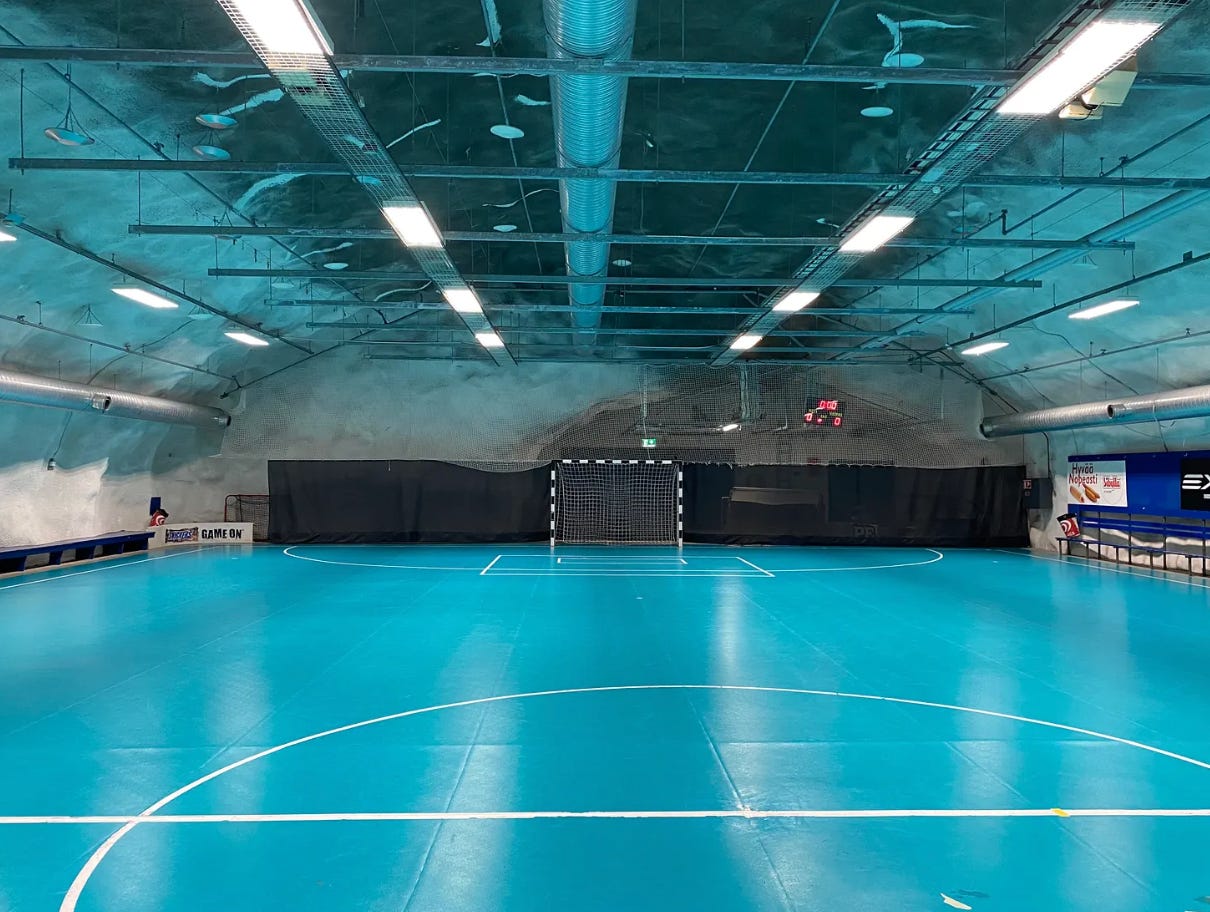
Central to this is Finland’s doctrine of “Total Defence”, what Moody describes as “an ability to plan and execute grand strategy over periods that extend into the geological.” Total Defence is a whole-of-society approach to national security, involving the military, government, businesses and citizens. It combines military preparedness with protecting critical infrastructure and maintaining essential services during crises. It involves everything from the country’s extraordinary network of underground bunkers, to its education system designed to make its public immune to disinformation.
In 1980, the Swedish historian Kristian Gerner wrote an article called “Kazan and Manchu: Cultural Roots of Soviet Foreign Relations”. His thesis was that Russia had a deep cultural instinct to divide the world into either Kazan – neighbours who can be subjugated and incorporated, or Manchu – neighbours who were strong enough to resist such predation and needed to be accommodated. Whatever ideological conception governed Russia, this instinct remained.
Finland, a country of just 5.6 million people, has made itself into a Manchu. The first demonstration of this came in 1939 when the Soviet Union attempted to invade Finland. Although it was able to capture 10% of Finnish territory, it did so at an enormous cost in terms of personnel. The Finns exploited their superior understanding of the terrain to inflict 5 times as many casualties on the Soviets. Moscow learned its lesson, and the Finns resolved to make sure that this lesson always remains prominent in the Kremlin’s thinking.
Finland’s other strategy for maintaining its independence during the 20th Century has often been unfairly categorised. Known as “Finlandisation”, the tactic was to make Moscow think that Finland was within its sphere of influence and therefore invasion was unnecessary, while simultaneously developing a military capability able to resist invasion, alongside a Westernised cultural and economic connection. Although Moody highlights that debates remain in Finland today about the extent of “bending” to the Soviet Union that was deemed necessary to pull off this trick.
Here Finland’s neutrality during the Cold War was simply a way of navigating the era’s geopolitical terrain. As Moody argues, Finland’s neutrality was practical, and this marked it as distinct from Sweden’s which was ideological. This made Finland’s move to join NATO following Russia’s full-scale invasion of Ukraine easier to pursue – it was simply the practical response to the times. The leap, therefore, was far bigger for the Swedes.
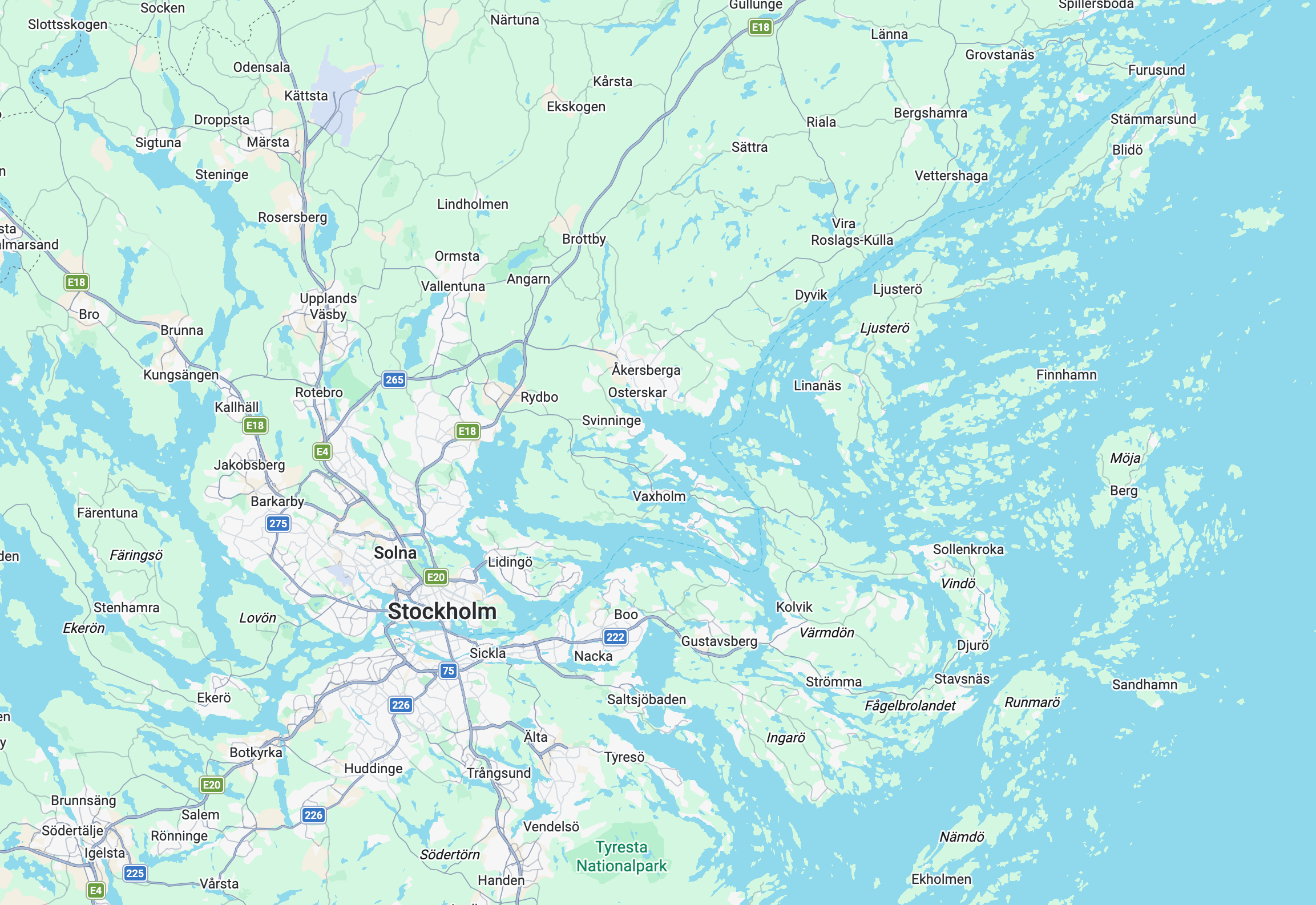
The leap across from Helsinki to Stockholm is only an hour by plane, however, the absolute best way to travel between the two capitals is via ferry. Watching drunk Swedes belting out Roxette songs may not be everyone’s cup of tea, but aside from the ferry’s duty free shop, it is the scenery that makes the trip worthwhile. If you can emerge early in the morning from your cabin and get up on the roof, you’ll witness one of the most truly spectacular entries into any city in the world as the ferry meanders through the Stockholm Archipelago. Sweden, for all you quiz hounds out there, happens to be the country with the most islands (although it may be pushing what actually constitutes an island).
Despite living in Sweden’s southern Skåne region, I adore Stockholm and seek to spend as much time there as possible. But this visit coincided with one of my other favourite things in the world – elections. Recently I’ve been trying to convince people that it is enthusiasm, rather than citizenship, that should define eligibility to vote in a country’s election. This seems unlikely, but for the Swedish election I managed the next best thing – talking my way into a press pass for the Social Democratic Party’s election night event.
One of the central issues of the campaign was the full removal of the cordon sanitaire around the Sweden Democrats – the country’s radical ethno-nationalist party (and not to be confused with the Social Democrats). Following the last election, the party was kept out of government, but provided a confidence and supply agreement (the Tidö Agreement) for the coalition of the Moderates, Christian Democrats and the Liberal Party. This election, the three coalition parties had stated that they would invite the Sweden Democrats into a formal coalition, should the numbers lead to such a result.
Unlike the AfD in Germany, the Sweden Democrats are not sympathetic to Russia and are supportive of Sweden joining NATO. They have apologised for their neo-Nazi past (“we promise not to do it again”), yet they remain hostile to Sweden’s demographic realities, and lazily adopted the Trumpian election slogan “We’ll make Sweden Sweden again” (Vi gör Sverige till Sverige igen).
The surprise on election night was that the Sweden Democrats lost just over 3% of its vote from the previous election (their first decline in votes since entering the Riksdag in 2010) – making it mathematically impossible for the Moderate/Christian Democrat/Liberal coalition to invite the party into a majority government. Despite achieving its worst result since 1911, the Social Democrats are in the best position to form a government, but establishing a majority coalition may be difficult, as with how the numbers fell, they’ll be unable to form a majority without Vänsterpartiet.
Previously, Vänsterpartiet, the former Communist Party of Sweden, has eschewed being part of a coalition government, choosing instead to snipe from the sidelines. But now they want in. However, the Centre Party – formerly a Nordic agrarian party, which now describes itself as “liberal feminist” – refuses to work with them. Vänsterpartiet are suspicious of the European Union and opposed to Sweden’s membership of NATO, as well as being mired in the postmodern identity politics that dominate progressive politics within the Anglosphere. The Centre Party – unlike its ideological cousin in the Liberal Party – has kept its spine and made its principles clear; there is no cooperation with the Sweden Democrats, and no cooperation with Vänsterpartiet.
Of course, parliamentary cooperation is just one element of political and social influence. Both the Sweden Democrats and Vänsterpartiet – and their supporters – are susceptible to the cynicism and conspiracism that Russia uses to try and destabilise Western societies. For Sweden to navigate this, Moody acknowledges the work of the country’s Psychology Defence Agency, which attempts to address what is potentially the most consequential problem of our modern age - how do we make our publics immune to bullshit?
Alongside Elon Musk, the Russian government is the biggest disseminator of bullshit on the planet. Spreading disinformation is seen as one of the key tools in the “tournament of shadows” that Russia is engaged in. It is here, Moody explains, that the regime has come to believe that “the psychology of the opposing population was a new domain of warfare and grinding it down was a higher objective than anything that guns or bombs could achieve.” The purpose is to sow lies and foment mistrust to keep Western societies in a permanent state of anxiety and uncertainty.
As well as disinformation, there is a need to understand the wholesale range of tools that Russia uses in its destabilisation efforts. This includes simply buying political figures like former German chancellor Gerhard Schröder, to amplifying useful idiots like France’s Jean-Luc Mélenchon, or indeed, U.S. president Donald Trump. Alongside this are the drone incursions into European countries and cyber attacks against critical infrastructure.
Yet there is also no attempt at disruption that Russia deems too small. Moody writes that “the Russians were increasingly hiring marginalised or disgruntled young ‘misfits’ for a range of low-level tasks such as arson, minor sabotage and spraying inflammatory graffiti.” This was something that Lithuania’s National Crisis Management Centre told me as well.
In seeking to understand Russia’s behaviour, Moody draws upon a novel by the Russian exile, Victor Erofeyev, called The Great Gopnik, which he describes as “an excoriating denunciation of Putin and Russia’s wider political culture.” The gopnik of the book’s title “is a ubiquitous figure across the Slavic world, a petty hoodlum who compensates for his intellectual limitations by bullying the weak.” The argument of the novel being that Russia is a gopnik state.
This is the tragedy of the Baltic Sea region. It is a gorgeous and fascinating area of the world, and I am grateful for the privilege of being able to move myself through it. Yet the region is one that has to live in a permanent state of vigilance due to the inflamed resentments, emotional incontinence and aggressive insecurity of its largest neighbour.
As the Finns, the Poles, and the Baltic states understand, there is no pretending this reality doesn’t exist. The only credible way to govern themselves is to make resistance and resilience their national ethos. But as Moody et al reported in The Times last week, speaking to many of the region’s defence ministers and security chiefs, there is also the need to be calm and not panic at every Russian provocation. Panic, of course, plays into Moscow’s hands.
Moody’s closing argument is that credible deterrence is Europe’s only option, because the only thing a gopnik understands is a fist bigger than its own. Yet a credible European deterrence ultimately requires German power – this is precisely what Moody's book identifies as the hinge on which the region's future depends. Yet with the current state of German domestic politics, this remains one of the great uncertainties facing the Baltic Sea region.