

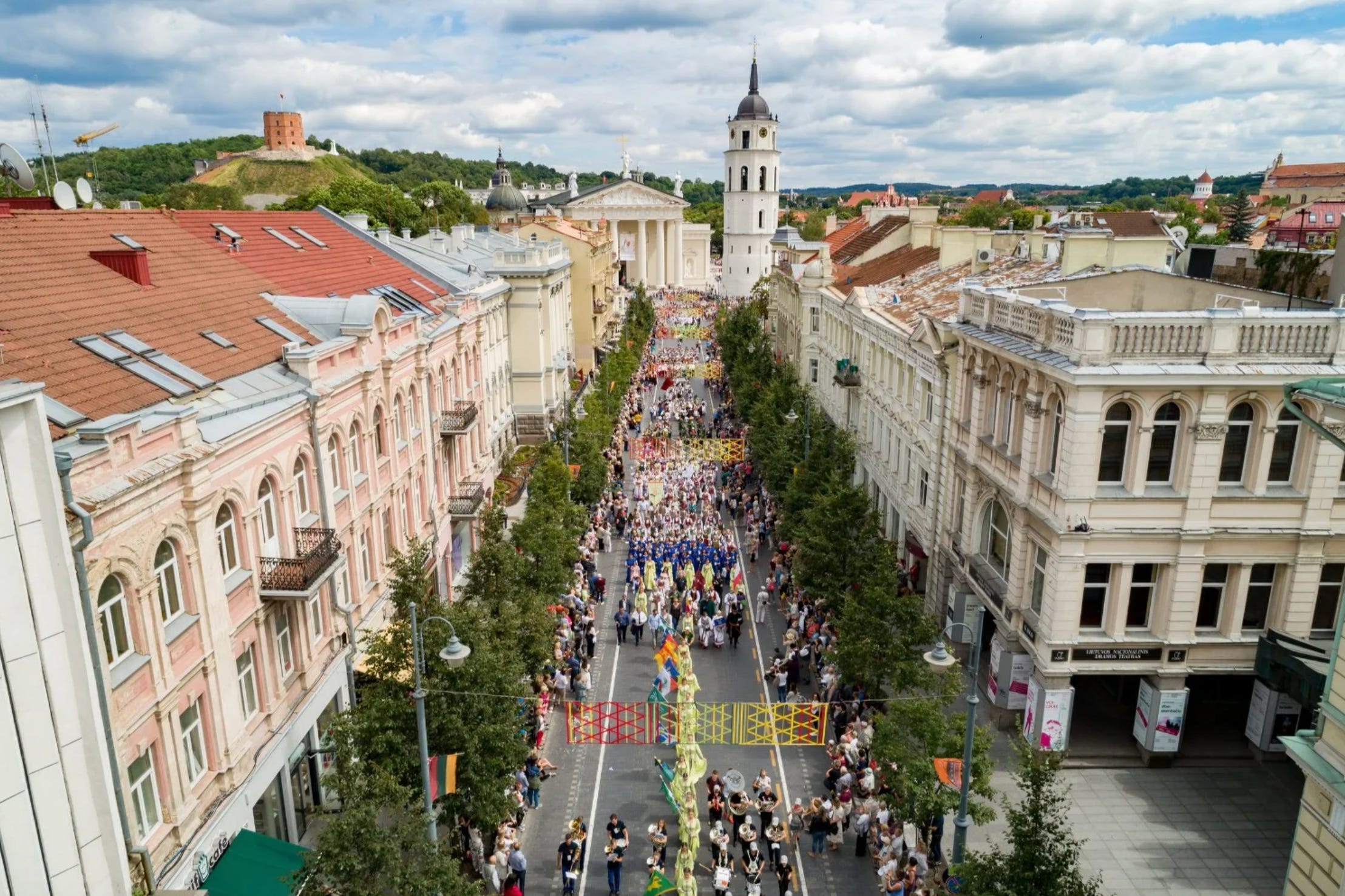
In June 1989, nine months before declaring independence from the Soviet Union, Lithuania began publicly reasserting its national symbols. The Vilnius city authorities moved to rename the grand boulevard that runs from the Neris River to Cathedral Square – and houses most of Lithuania’s government and cultural institutions – after Gediminas, the founder of the city and one of the central figures of Lithuania’s medieval statehood.
The street’s name had become emblematic of Lithuania’s tragic history, trapped between larger powers intent on domination. Under the Russian Empire it was initially christened after St George, the patron saint of Moscow. Then during Poland’s interwar control of Vilnius it was renamed to honour the poet Adam Mickiewicz. The joint Soviet-Nazi invasion of Poland gave the Lithuanians a brief period to call it Gedimino prospektas, before the subsequent Soviet occupation dedicated it to Lenin, then Stalin, then Lenin again.
The move to reclaim the boulevard’s Lithuanian identity was an opening created by Mikhail Gorbachev’s policies of glasnost and perestroika. These reforms created new space for public expression and collective action beyond the control of the Soviet state. Given the learned habits of living within a totalitarian regime, the opportunity took several years for the public to fully realise, but once the opening was understood, it inspired a flurry of activity.
By the late-1980s, new civil society groups began to form around issues like environmental protection, national symbols were reclaimed and displayed, public singing of patriotic and folk songs became common and, critically, the secret protocols of the Molotov-Ribbentrop Pact that had enabled Lithuania’s occupation were openly challenged. A new political movement called Sąjūdis established branches across the country, published its own newspapers and organised rallies. It legitimised the discussion of Lithuanian history, language, and sovereignty. It reignited the idea of an independent Lithuanian people in the public consciousness.
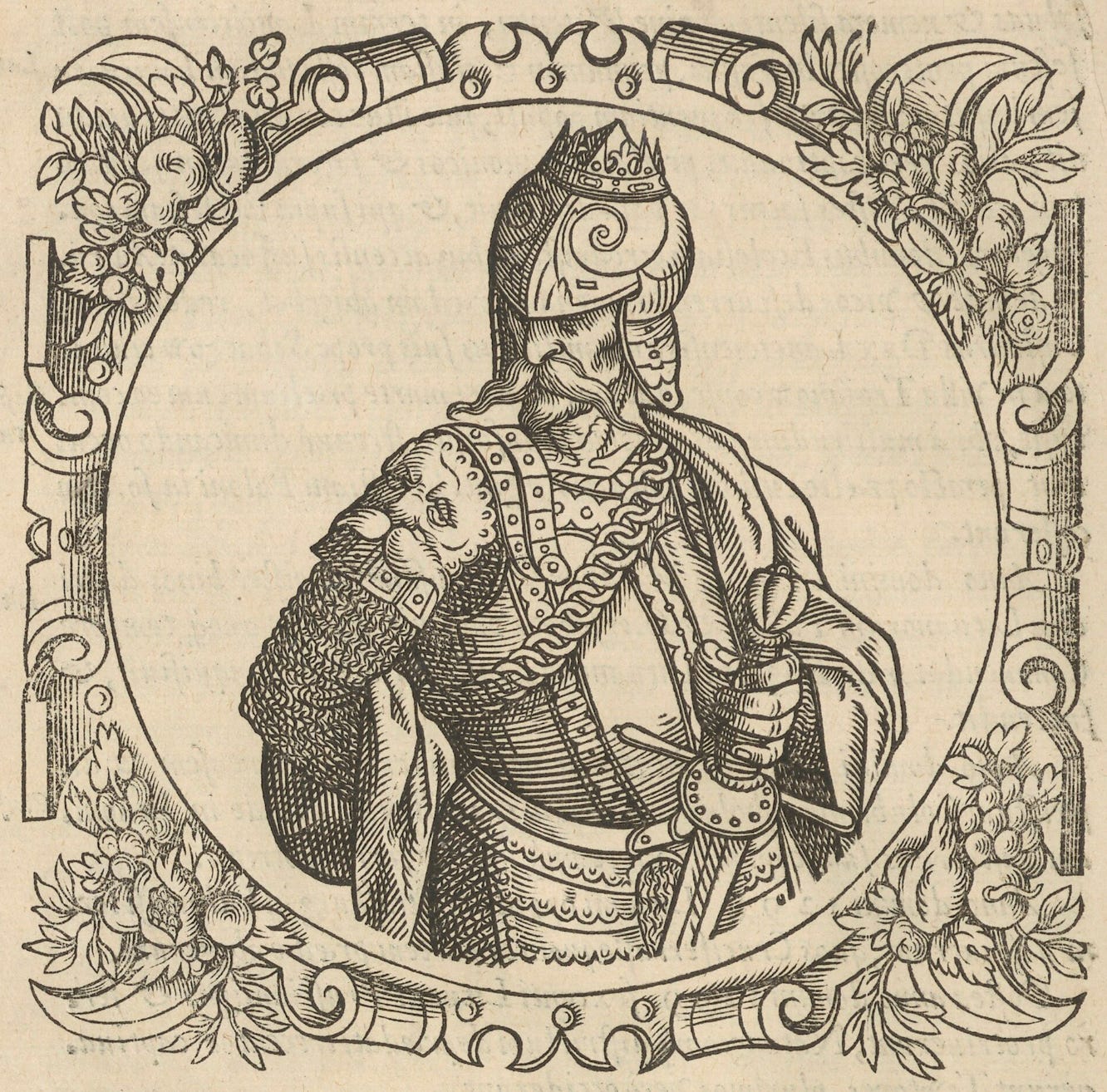
The choice of renaming Vilnius’s most important street after Gediminas was not merely about dispensing with Soviet iconography. Gediminas ruled Lithuania in the fourteenth century, when the Grand Duchy was becoming a political force in eastern Europe, conducting skilled diplomacy, forging alliances and competing with other European powers. Gediminas represented Lithuanian agency and ambition – a state that was not peripheral or subordinate, but one able to deal with more conventionally capable neighbours on its own terms.
The memory of this period mattered because Lithuania’s subsequent history was defined by the loss of autonomy. The partitions of the Polish-Lithuanian Commonwealth saw Prussia, Russia and Austria divide its territories, ending Lithuanian statehood. Most of the former Grand Duchy fell under Russian rule, while parts of what became called Lithuania Minor remained under Prussian, and then German, influence. The subsequent German and Polish struggles over Vilnius, followed by the occupations of the Soviets, then the Nazis, then the Soviets again, placed the idea of a Lithuanian nation-state in perpetual uncertainty. Throughout this turbulence, a national story needed to be maintained in people’s hearts, providing a foundation for independence when the opportunity arose.
Gediminas’ importance to Lithuanian national psychology lies not simply in a glorious past that Lithuanians might hope to recapture, but in a set of ideas and approaches to statecraft that remain relevant to a small nation confronting more powerful neighbours. His defining challenge was preventing the Knights of the Teutonic Order from conquering Lithuania. Facing a stronger military opponent, he understood that force alone would not be enough. He wrote directly to the Pope and indicated a willingness (potentially not sincere) to accept Catholic Christianity to encourage papal intervention. He cultivated relationships with neighbouring rulers through dynastic marriage and courted the merchant elites of Europe’s commercial cities, recognising their competing interests as a tool to exploit divisions within the Teutonic Order.
Gediminas also sought to strengthen Lithuania from within, inviting traders, craftspeople and other skilled settlers to bring their expertise and resources to the country. His approach combined ingenuity, initiative and pragmatism – rather than accept the limits of Lithuania’s relative weakness, he sought to change the circumstances in which it operated. His legacy is a model of national creativity in which a small state does not merely suffer what it must from greater powers, but actively seeks to shape its own position in the world.
This made the renaming of Vilnius’s principal boulevard in honour of Gediminas more than just an act of national expression; it was a statement of future statecraft. Since restoring its independence in 1990, Lithuania has resolved that it will never again be dominated by predatory powers. Defiance and determination have guided its national ethos. But for a country of fewer than three million people, defiance alone is not enough: it must be matched by cunning, strategic courage and diplomatic audacity.
Being geographically bound to an instinctively belligerent great power presents a permanent challenge to Lithuania’s security and independence. Regaining its sovereignty created an opportunity to form new alliances, and Vilnius was quick to apply for NATO membership, but alliances are only as effective as the commitment to their principles and the political will sustaining them. What may have looked like an inviolate security guarantee when Lithuania eventually gained accession in 2004, now seems far less assured due to the Trump Administration’s revolutionary pivot of American foreign policy.
Lithuania, however, recognised the limitations of alliance dependence prior to Donald Trump’s political emergence. Many of the larger and more influential European states do not have the same pressing security concerns as Lithuania, and the United States itself has no territorial threats. NATO, therefore, creates a particular challenge for smaller states close to Russia: they are keen on collective protection, but cannot afford to let their foreign policy become entirely reactive to the larger allies who may interpret threats with less urgency.
Russia’s annexation of Crimea in 2014 reinforced the need for a more entrepreneurial approach to Lithuanian security. Vilnius was adamant that condemnation alone would not deter Moscow and so advocated economic sanctions, an arms embargo, stronger NATO deployments in the Baltic states and military assistance for Ukraine. It warned that allowing Russia to seize territory by force without facing meaningful consequences would invite further aggression. With this, Lithuania was proved correct.
Lithuania’s belief was that the European response needed to be centred on deterrence rather than limp diplomatic protests that Russia could easily ignore. The country’s approach has been one of “offensive diplomacy” – using its own initiative to push other European governments towards more assertive countermeasures against Russia.
Such tactics upend conventional wisdom about how smaller states should behave in the international system. A cautious small state might seek security by avoiding controversy, maintaining cooperative relationships and waiting for larger allies to establish a common position. But this path can leave Lithuanian security in the hands of states which don’t feel threats existentially.
Offensive diplomacy reverses this dynamic. It allows Lithuania to show leadership, to set agendas and precedents, demonstrate moral courage that raises the political costs of inaction for larger states, build coalitions around positions that initially lack consensus and force other governments to reckon with choices they might otherwise be reluctant to take, or may consider postponing.
In late 2021, Lithuania made what was arguably its boldest act of offensive diplomacy. Bold, because it looked beyond its immediate security concerns with Russia towards the other authoritarian great power in China. When Taiwan sought to open a de facto embassy in Vilnius, Lithuania departed from Beijing’s preferred naming convention of “Taipei Economic and Cultural Office”, and allowed the mission to be called the Taiwan Representative Office.
Driven in part by then-Foreign Minister Gabrielius Landsbergis’s ambition to brand Lithuania as the vanguard of a defiant, “values-based” global order, the move also had a pragmatic economic incentive. Lithuania had developed a highly sophisticated laser industry, and these lasers are vital in the production of the semiconductors that Taiwan excels at.
Yet there was also a natural empathy for Taiwan in Vilnius: a small nation living under the shadow of an enormous superpower that denies its right to exist. Lithuania could not help but draw parallels to 1940, when Soviet foreign minister Vyacheslav Molotov bluntly informed the Lithuanian Deputy Prime Minister, Vincas Krėvė-Mickevičius, that his country would be absorbed into the Soviet system. Molotov framed the annexation not merely as a security buffer, but as the fulfilment of Soviet ideological ambition – much like the Chinese Communist Party’s own nationalist designs on Taiwan.
The decision to challenge norms in relation to Taiwan triggered Beijing to downgrade diplomatic ties with Vilnius, block Lithuanian exports and pressure multinational companies to exclude Lithuanian businesses from their supply chains. Following his election in July, current prime minister, Mindaugas Sinkevičius, has called the decision “maybe too brave” and sought to repair relations with China. But Vilnius still has no ambassador in Beijing, the Taiwan office has kept its name, while exports have largely recovered. Although remaining politically contentious within Lithuania, the tactic sought to exhibit defiance, accept the costs for doing so, but seek to create a new discourse on Beijing’s power.
This proved a little too ambitious, as no other country has followed its lead in relation to Taiwan. However, Lithuania’s actions gave urgency to the European Union creating an Anti-Coercion Instrument, giving the bloc a mechanism to navigate and deter economic coercion by third countries. The instrument seeks to defend a member state’s freedom from domination by ensuring that no EU state has to face a larger power by itself. This was a significant win for Vilnius’s approach.
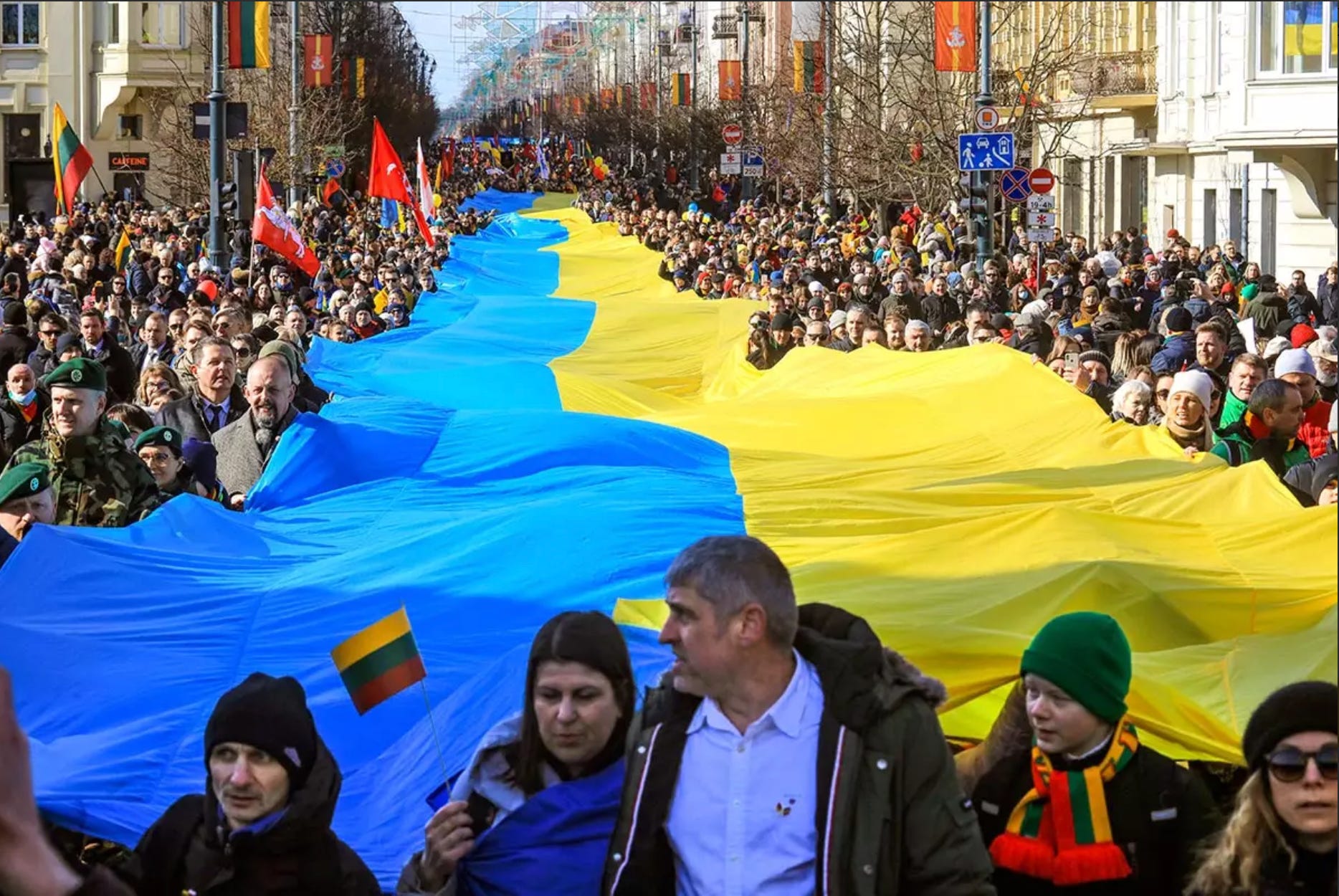
Since Russia’s full-scale invasion of Ukraine, this active approach to diplomacy has accelerated. Lithuania has repeatedly pressed for a more confrontational response to Russian aggression than many of its European partners were initially willing to support. Its approach is shaped by a judgement that Moscow’s aggression is not an isolated or timebound problem, but a persistent feature of Russia’s international behaviour. The burden of this behaviour falls disproportionately on the states that share a border with it.
Vilnius deduced Russia’s intent early and delivered Stinger missiles to Ukraine 11 days before the invasion. Since then, it has ranked among the largest providers of military aid to Kyiv relative to GDP, and has been a consistent voice urging other states to match it. Alongside Latvia and Estonia, Lithuania pressed Germany to deliver Leopard tanks as early as 2022, making the practical argument that Western tanks use standardised ammunition, so that if one country supplies the tanks, any other can supply the shells. Germany has since provided 18 tanks to the Ukrainian cause.
In April 2022, Lithuania became the first EU country to stop importing Russian gas, arguing that every euro spent on Russian energy funded its belligerence. The argument was also strategic: energy is a weapon, and dependence on it was a vulnerability that Moscow could easily exploit to weaken European action. That dependence was significant and not easily overcome, but in January 2026 the EU formally adopted a regulation banning Russian gas, with LNG imports ending at the start of 2027 and pipeline gas phased out by autumn that year.
Lithuania has pushed Europe to rethink how it confronts Russia’s shadow fleet, the network of ageing tankers that carry Russian oil outside Western regulatory systems, keeping Moscow’s revenues flowing despite sanctions. Alongside its Baltic neighbours, Vilnius argues that the fleet is a security problem, not merely a sanctions problem, as these vessels are also suspected of attempting to damage undersea infrastructure. The aim is to move the response from economic restriction towards maritime security and deterrence.
More than 600 vessels are now banned from EU ports and maritime services, but the more consequential change came in June, when Operation Irini, the EU naval mission created to enforce the arms embargo on Libya, amended its rules of engagement to allow the boarding of suspected shadow fleet vessels. A mission built for one theatre is now being turned on Russia’s tankers, which is the conceptual shift from economic restriction to maritime security that Vilnius has been urging.
Lithuania was an early advocate for frozen Russian assets should be used to fund Ukraine reconstruction, arguing that Russia should bear the cost of the destruction it has inflicted rather than leaving the bill to European taxpayers. Their position reflects a broader security calculation: ensuring the aggression has substantial financial consequences as a tool to deter future threats.
The EU has decided these assets stay frozen indefinitely, but it has not gone further as Belgium fears the legal consequences. Most of Russia’s assets sit with Euroclear, a Brussels-based company, and Belgium worries it will be left to pay alone if Russian legal challenges succeed. It wants guarantees from every EU government first. Lithuania has been urging the EU to find a way to assure Belgium that such action is safe.
For Lithuania, independence is more than the formal sovereignty of a state or the protection afforded by its alliances. It is a national commitment that must survive even if the institutions of statehood are lost. That conviction was forged through successive occupations, when the question was not about how Lithuania could defend itself, but how the Lithuanian nation-state could find a path to existence.
In February 1949, with the Soviet occupation entrenched and the odds against them, eight resistance commanders gathered in a farmstead bunker at Minaičiai and issued a declaration proclaiming their Council the sole legitimate authority in Lithuania. They chose the anniversary of the 1918 Act of Independence and grounded their claim in the 1922 Constitution and the Universal Declaration of Human Rights, so that their defiance came with a legal argument attached. The state, in their conception, did not cease to exist when its territory or institutions were seized, or streets renamed; it persisted wherever people refused to accept its end.
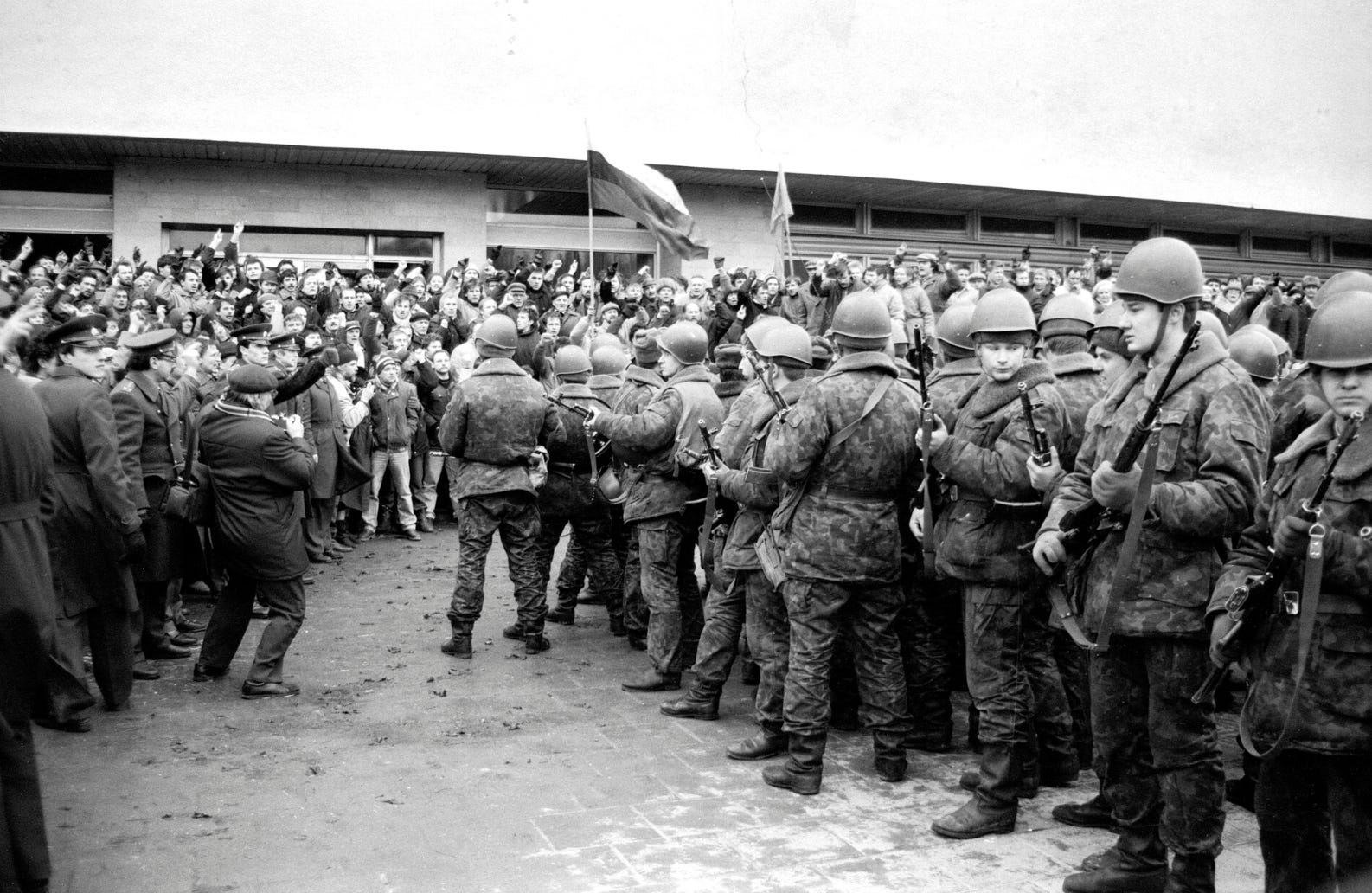
On 13 January 1991, 10 months after Lithuania’s declaration of independence, Soviet troops moved into Vilnius seeking to capture its main institutions. Thousands of people gathered to defend the Vilnius TV Tower and other media outlets, while troops fired upon and drove tanks into them – killing 13 and injuring hundreds. Resistance persisted outside the parliament and the Soviets called off their plans to seize it. Lithuania’s independence would stand. Those defending its institutions were regular citizens, not soldiers, embodying the idea that when the state’s institutions are threatened, their defence passes to the people.

Both ideas, that the state persists in its people and that defending it is their duty, were enshrined in the 1992 Lithuanian constitution as legal principles. Article 3 gives each citizen the right to resist any encroachment by force on Lithuania’s independence, territorial integrity and constitutional order, and this right does not depend on a government surviving. Subsequently, the 1996 Law on the Basics of National Security turned that right into policy, committing the state to prepare for unconditional defence and total resistance through guerrilla warfare, civil disobedience and non-collaboration. Then in 2022, the Law on Armed Defence and Resistance to Aggression supplied the operating rules: resistance begins from the first moment of aggression, no one may restrict the right to resist an occupying power, and Lithuania will not wait for international assistance.
Yet, aggression nowadays takes forms more multifaceted and distinct from the traditional invasion of territory. Disinformation, cyberattacks, sabotage, petty crime and the manipulation of migrant flows have all been used by Russia to disrupt Lithuanian society. Moscow’s hybrid campaigns are designed to erode the Lithuanian people’s confidence in their own state. In 2023, the National Crisis Management Centre was created to coordinate the Lithuanian response across its institutions. Its guiding principle is that the state should be vigilant but not disturbed – as the measure of resilience is not whether a threat is made, but whether the country is disrupted by it.
Being calm and resolute is central to the display of national courage. It signals to Moscow that Lithuania will not be cowed, and it allows Vilnius to exercise agency beyond its conventional power. This is because moral courage creates leverage. A principled stand against a more powerful state attracts attention, strengthens a country’s reputation and makes its interests harder to ignore. The aim is not to simply demonstrate virtue, but to convert a principled act into diplomatic weight.
The willingness to accept costs is essential to this diplomatic signalling. Great powers rely on smaller states anticipating their displeasure and moderating their behaviour in advance out of fear. A state that stoically absorbs the penalty – as Lithuania did with China – complicates the calculation that great powers make. Taking a stand also confers authority, as a country without conventional power earns credibility because its commitment to an issue cannot be dismissed as rhetoric. That credibility becomes valuable when building coalitions and advocating for international rules.
A small state cannot eliminate the asymmetry of power, but it can refuse to treat that asymmetry as a limit on its agency. Lithuania’s influence comes from the capacity to initiate – to move the boundary of what is considered possible, absorb the early cost of doing so, and leave larger states to follow once the position has stopped looking radical. By reshaping how other nations evaluate their choices, offensive diplomacy establishes a small state’s position as the benchmark to which larger states must consider.
Lithuania’s security still depends on allies whose threat perceptions and political priorities may differ from its own, and whose willingness to act ultimately determines how far Vilnius can translate diplomatic influence into advantageous outcomes. That dependence is why initiative matters. Nearly seven centuries after Gediminas worked to change the circumstances Lithuania faced rather than accept them as inevitable, his enduring insight remains – the survival of a small nation can not to be reliant on the calculations of more powerful states, it needs to use its creativity to force those states to calculate with it.