

First brought into operation in 1997 – and adopted European Union-wide in 2003 – the Dublin Regulation is a European law that determines which state within the EU (and other signatories) is responsible for assessing asylum seeker applications and how decisions are then accepted within the union. It enables Europe to work as a bloc on asylum, and if refugee status is rejected by one signatory country then no subsequent application can be made to another signatory country.
Upon withdrawing from the EU the United Kingdom also withdrew from the Dublin Regulation. Asylum seekers rejected on the continent can now load up into boats in France and try to make a claim across the English Channel. Which they have in great numbers. If Brexit was about “taking back control” – with the implication that this control was of borders – then it has done the very opposite.
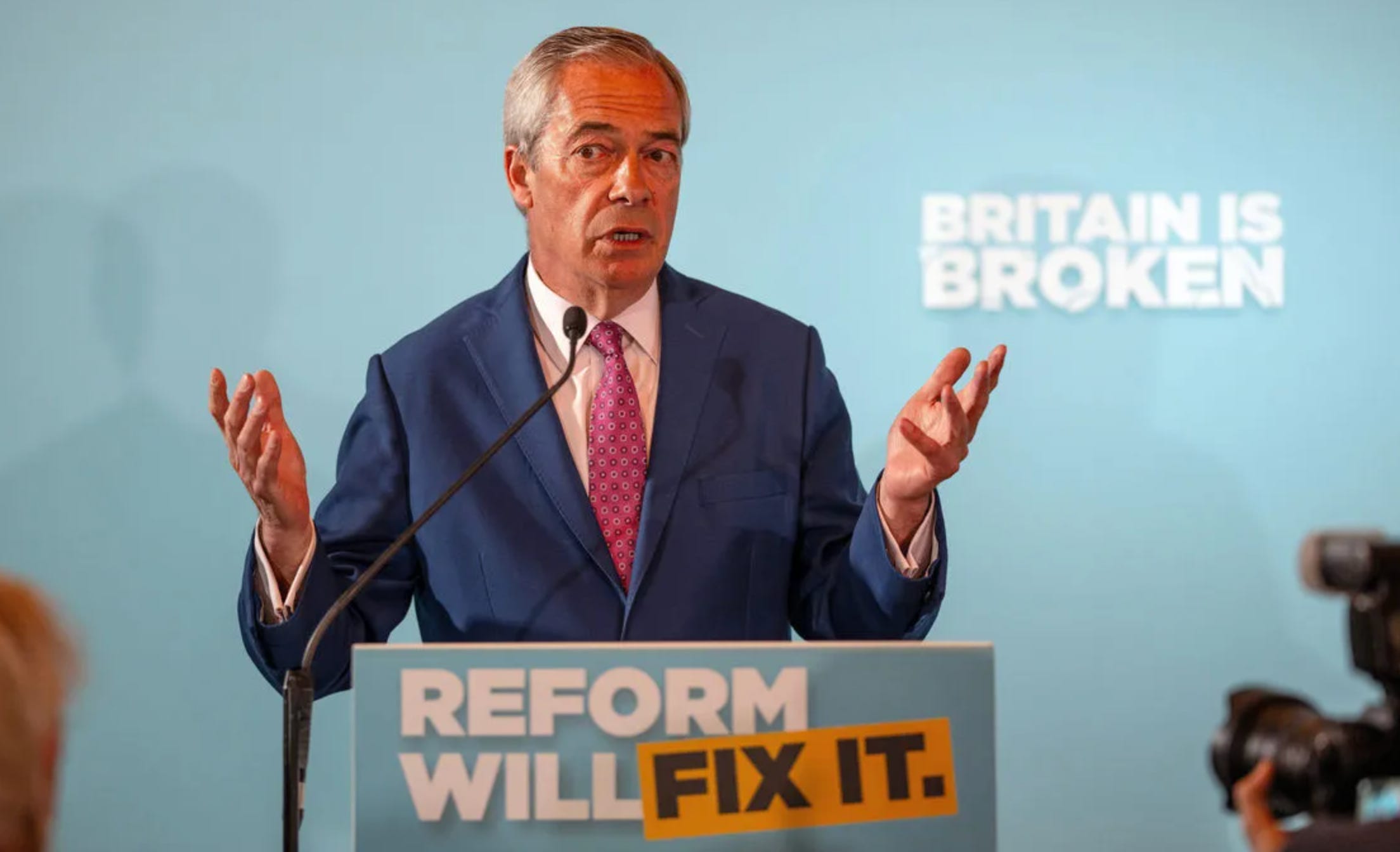
After last week’s English council and Scottish and Welsh parliamentary elections, the main beneficiary of this lack of control is one of the men most responsible for the UK leaving the EU, Nigel Farage. With his Reform Party dramatically increasing their number of local councillors – and winning full control of 14 councils – as well as rising to become the second largest party in Wales, and equal second in Scotland.
The barking politics of outrage was always going to need a new thrill once it had caught the Brexit Bus, so the febrile atmosphere in the UK that Reform has capitalised on is no surprise. But what if Farage was actively seeking to create the very thing he has wanted people to be outraged about?
Farage is not alone in employing such a strategy. Either by design, or unwittingly, almost every major modern political movement seems to be working against their stated intentions. If we stop, take a breath and think a little, it is apparent that the motivations of politics are now geared towards creating problems, not solutions.
We can see this clearly in the creation of new ideological lenses. A doctrine like “anti-racism” has required racism to exist in order to justify its bureaucratic reach. The best way to animate racism is to encourage people to think about themselves primarily as a skin colour. To espouse a view of History that sees humanity as a zero sum competition between ethnic or racial groups. It was always going to lead us to where we are today – with a far more open and overt racism than we’ve had in decades.
From the immense personal power consolidation that proclaims to be “making America great”, to progressive NIMBYism that pretends to be concerned about housing affordability, everywhere you look modern political movements are engaged in a game of subterfuge. Claiming to be something that on closer inspection they are not.
Of course, politics has always been tricky. Politicians have long understood that emotionalism can shift more votes than dry rationalism. Yet previously emotional manipulation was often still grounded in a genuine commitment to a stated outcome. The manipulation was a means, but the cause was still the end result. This has now dissolved.
Our ideal political environment should operate on the assumption that political movements are trying to achieve specific outcomes. Groups organise around an issue, seek to advance that issue through a political party, hope that this party can win elections by persuading the public that this issue (among many) has merit, and then convert these ideas into policy.
But what if the incentives of power are now completely divorced from this process? Due to the need to maintain narrative power, positive outcomes now offer no political reward. Currently, there is a deep psychological lust within the West to be upset – and this is creating a strange new political terrain where solutions are not just unnecessary, they have become a threat to obtaining political power.
The psychology of our broad political cultures illustrates how this is being incentivised.
Progressive politics has always been driven by a desire for a struggle for a cause. At its best it has advocated for significant improvements to our societies and the advancement of opportunity for a broader range of groups within these societies. Yet as these improvements have become normalised the desire for struggle has remained. The instinct within progressive politics is that there’s always a more radical position, and this position is morally superior by default. There’s no recognition of, or contentment with, improvement.
However, as progressive politics has shifted to become a middle and upper class concern, new problems have needed to be manufactured – different from the financial betterment of the working classes – to maintain the struggle. Progressive politics can no longer legitimately claim to be fighting for material improvements, so it has instead turned to post-material ones like identity. It’s a way for middle and upper class people to claim disadvantage, to invent new struggles, and to seek power through narratives of victimhood.
This has created new institutional incentives to sustain grievance rather than resolve it. Resolutions to social problems would dissolve the sense of moral outrage and bureaucratic oversight from which progressive politics now draws its power. The result is a politics that depends on generating new categories of harm, and new classes of experts to staff bureaucracies and administrative bodies that encroach further into social life. These new bureaucracies just happen to advantage those well-educated people with credentials and articulation, and these people shift the focus of the state away from those with genuine material need.
Likewise, conservative politics has certain innate approaches that have been amplified and directed towards problem creating. Conservative parties have a time-tested tactic of ramping up people’s fears in order to position themselves as people’s security. Crime and national security have been the traditional levers – reliable, visceral, easy to pull.
However, modern conservative politics has gone further, expanding the menu of fear to include cultural displacement, demographic change, and a deep suspicion of fellow citizens. The threats now are not the foreign army or the criminal, but the political rival, the expert, the curriculum, the neighbour, and the rule of law. What was once simply a tactic to win elections is now the product itself – to create a permanent political atmosphere of intense anxiety and grievance, not to be resolved but to be sustained.
Yet the bigger shift in our political landscape has not just been the capturing of institutions or the intensification of bullshit, but a politics that has actively sought to create material problems, and especially material problems for those who can least afford them. Which returns us to Farage.
There is no doubt that the UK’s referendum to leave the European Union wouldn’t have occurred without Farage’s agitation. He was the Brexiteer-in-chief, using his persistent advocacy to manufacture internal division within the Conservative Party, which led to David Cameron’s catastrophic miscalculation to try to quell this division via a referendum.
The results of this have now become stark. Brexit has inflicted severe and measurable damage on the UK economy. By 2025, GDP was 6–8% lower than it would otherwise have been, investment had collapsed by up to 18%, and roughly one million jobs had disappeared nationwide. The average citizen was on average £2,000 worse off, trade with the UK’s largest partner is now bogged down in bureaucracy and delays – the very thing Brexit claimed it was fighting. While farming communities lost EU subsidies with no adequate replacement, and the fishing industry – one of Brexit’s most potent symbols – has found itself locked out of the very EU markets it depended on to sell its catch.
The cruelest irony is where this damage landed. The working-class communities of northern England – post-industrial towns like Burnley, Scunthorpe, Grimsby, and Hartlepool – voted overwhelmingly for Leave. But these towns, already stripped of manufacturing, mining, and steel, lost EU structural funds that had been designed for local regeneration, and the collapse of medical professionals moving from Europe to the UK has placed considerable stress on the NHS and social care services within ageing communities.
While proponents of Brexit will claim that what they were advocating for a restoration of sovereignty and a return of cultural dignity, there is no dignity in material decline. The hardship and emotional stress that has emerged has weakened the personal sovereignty of individuals and their ability to navigate the world comfortably. Alongside this, instead of having a pool of labour from culturally similar countries in the EU to draw upon, post-Brexit, businesses in the UK have subsequently sought labour from countries with less cultural affinity. Leading to an intensification of cultural anxiety and far greater social division in the country.
Yet it has been the withdrawal from the Dublin Regulation that has been Farage’s greatest plot. It has created the visual threat that Reform has used to escalate this cultural anxiety. It has also led to an administrative burden that has drained the British state. In 2018, prior to leaving the Dublin Regulation, boats carried just 300 asylum seekers across the English Channel. This exploded to 46,000 people in 2022 after officially leaving the EU and the Regulation, and over 200,000 in total since 2018. As a result, maritime enforcement costs have also increased, including £30 million spent on Royal Navy Channel patrols in 2022–23. Overall asylum-system spending has risen from roughly £600 million annually before the small-boat crossings surged to over £4 billion a year by 2024.
This created a sense of national crisis that Farage has been able to successfully exploit by ramping up people’s fears. Even though, through his advocacy to leave the EU, he is the man disproportionately responsible for creating the situation.
Brexit had produced the opposite of what it claimed it would. But this has been the point. Farage has been the architect of the very sense of national upheaval he is now building his political – and financial – power upon. He has played the game of subterfuge perfectly, and after last week’s elections he has further enhanced this power beyond just influencing events, he has made great strides towards capturing the state.
To confront and remedy this deceptive form of politics a new form of political and media literacy is required – one with a clear focus on outcomes rather than rhetoric, and one that stops taking movements at face value and starts asking who benefits from problems remaining unsolved, and who is actively invested in creating them. This is not an easy shift. In particular it requires the media to overcome their own gullibility and political cheerleading to explain political incentives, highlight real world impacts, and expose charlatans.
And it requires the rest of us to stop seeing snakes as saviours. To be clear-eyed about the intent of modern political movements, but without feeding the very cynicism on which they thrive. Because in a world of entrenched cynicism, it currently looks like the most nakedly cynical bastards are winning.
Not new, in Britain reflects the symptoms of 'architecture of influence' Jane Mayer of 'Dark Money' fame that runs across the Anglo world and parts of Europe.
Fossil fuel faux free market or' segregation economics' of Atlas Koch and anti-immigrant now MAGA Tanton Network; both developed Project 2025 and inhabit Tufton St. London vs EU and immigrants.
However, the GOP were warned by the 'Cafe con leche Republicans' 15 years ago inn'The Shooting Gun Memo' (now disappeared) who were then being lobbied by Tanton Network to not pass Bush's immigration reforms and promoting dog whistling of immigrants as they equal Democrat voters; an electoral strategy masking eugenics.
Britain's Brexit was central to the same networks fossil fueled eugenics and corruption, but still.... neither analysed nor understood that it was a non dom Anglo, US and Russian coup vs the EU, regulation, the rule of law and the future.
Same dynamic creates regional insurgency with RW media and ecosystem targeting and too often radicalising low info, ageing, regional and white voters through 'collective narcissism' and 'pensioner populism', before the same electoral demographic powder goes away with 'the great replacement'.
Regional electorates across the world have become skewed towards retirees or pensioners, with voters dependent upon state services supported by budgets, but ameliorated by high temporary border movements as 'net financial contributors', ie. taxes paid by tourists, students, backpackers etc.
Boomer 'bomb' turns 80 this year, in several years deaths will have overtaken births for 'the great replacement'.....for demographic rebalance....around mid century.