

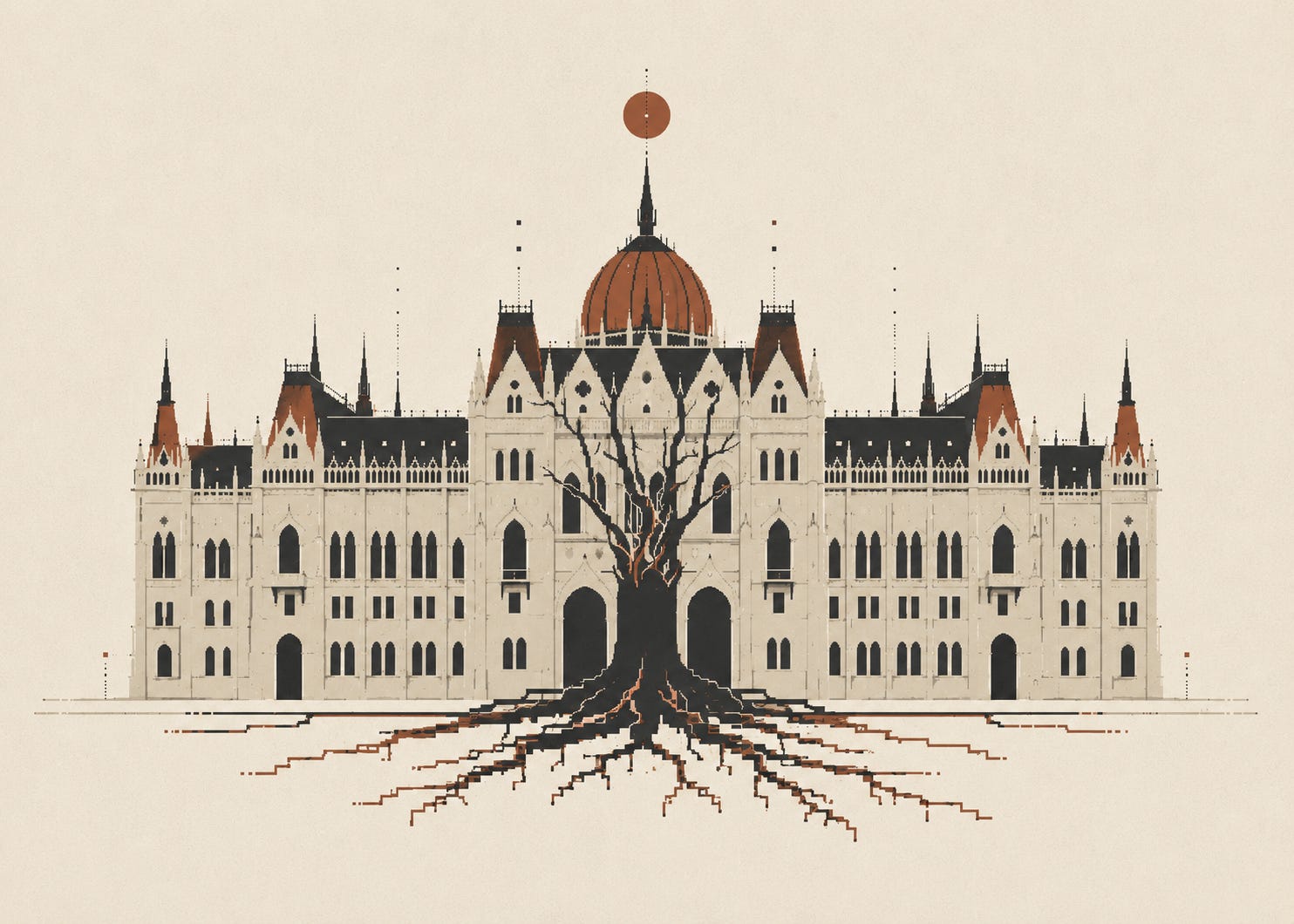
Beginning in mid-2025, protests under the banner of “March for Australia” erupted across several Australian cities, concerned about immigration and national identity. The demonstrations drew disaffected citizens, nationalist groups, and some overt hate-groups, united by the belief that Australia’s immigration policies were undermining the country’s collective identity. Participants sought to challenge what they saw as a political consensus favouring high rates of immigration and to defend the shared bonds they believed sustained a common national identity.
In their rhetoric the movement presented itself as standing up for Australian sovereignty and cultural continuity. They seized upon concerns about the cost of housing and stagnant wages as a way of framing their grievances as being about more than just cultural anxiety. Yet central to the movement was a belief in defending a particular idea of national identity. The prominent use of the Australian flag – with its lingering Union Jack – was designed to signal a national story rooted in the country’s Anglo-Celtic heritage and civic manners.
The use of the word “for” in the rallies’ branding highlighted a belief that this conception of the nation was under threat and required extraordinary action in order to save. What this movement was seeking to create was an environment where Australia’s population numbers and demographics, as well as its cultural direction, could be debated openly rather than treated as settled policy.
Across much of the Western world, similar anxieties have intensified. Demographic change has unsettled traditional understandings of national identity, leading to an increased cultural threat perception – a sense that familiar social norms, languages and symbols are shifting and what is emerging in their place is something new and less comfortable. In an age of rapid information flows and algorithmic amplification of negativity and fear, these changes can feel existential. The result has been a politics of heightened sensitivity, where social unease can be harnessed and inflamed by political entrepreneurs.
There is a hungry impulse within progressive politics to point fingers and label those involved in such demonstrations as “racists”. This is undoubtedly true for some, but it is also an oversimplification of the psychologies driving such public displays. Scratch the surface of these motivations and you rarely find ideology first. Instead you often find a deep unease with the cognitive overload of the modern world, and a desire to find emotional grounding in the familiarity and the believed serenity of the past.
Humans developed a strong sense of social identity because, for most of our evolutionary history, survival depended on belonging to cooperative groups. Living in small bands, shared identity fostered trust, coordination, and mutual obligation – qualities that made hunting, defending territory, and raising children more successful than acting alone. In a world where people rarely moved far from their direct kin and where political institutions were weak or absent, individuals instinctively sorted the world into familiar categories: friend and stranger, ally and threat.
This psychological inheritance helps explain the pull of nationalism, which scales these instincts up to the level of the modern nation-state. It also explains why, in a highly multicultural society like Australia, many people can feel unsettled by visible social change even when the country remains objectively safe and stable. The threat is not material – it is psychological.
The human brain also prefers tidy maps of the world. It is why we instinctively shift politics into binaries, even though political reality is a far more complex web of intersecting ideas and interests. There is a need for cognitive closure – the desire for firm answers and clear boundaries. Ambiguity is tiring. Cultural difference introduces ambiguity everywhere: in language, behaviour, aesthetics, social expectations, even humour. For some people the response is curiosity; for others it leads to a narrowing of the boundaries of belonging. Stereotypes, after all, are simply crude tools for simplifying complexity.
This sits alongside the permanent cognitive impairment of zero-sum thinking. Here there is a tendency to see the world as a fixed pie, where gains for one group must come at the expense of another. Applied to demographic change, this mindset can turn immigration into a perceived contest for status, resources and cultural space. What might otherwise be understood as social and opportunity expansion is instead experienced as loss – the sense that the arrival and advancement of newcomers diminishes the standing of those already there.
These psychological tendencies converge with the strong premise within cultural nationalism about what holds a nation together. Instead of prosperity, institutions, or opportunity, it places identity at the centre. Here there is a belief that the nation is not simply a political arrangement, but a historic community – bound by shared language, customs, symbols, and inherited memory. Its continuity is therefore seen as fragile. If shared identity is the glue of social trust and belonging, then rapid demographic or social change can appear to be a dilution of this glue. It can feel chaotic and confronting.
From this perspective, the priority becomes preservation. There’s a belief that immigration policy should be dictated by the ability to absorb people into the dominant culture, where the maintenance of cultural norms and civic habits is essential. The underlying instinct is conservative in the literal sense of the word – an attempt to conserve an inherited cultural ecosystem.
Due to this there is an importance placed on narrative control. There’s a view of national stories – the shared myths and historical interpretations through which a country understands itself – as a form of social infrastructure. When those narratives are fragmented or contested, there is concern that the psychological scaffolding of the nation is threatened. Debates over school curricula, public monuments, language use (especially land acknowledgements), and national holidays therefore take on outsized importance. They are seen as disputes over the nation’s operating system.
There is a strong emphasis on the emotional dimension of belonging. The nation is seen as being sustained by a sense of familiarity and mutual recognition, something that cannot be engineered solely through institutions, and definitely not through markets. There is a slower rhythm to the nation that builds trust and understanding. Growth is far less important than continuity; ensuring that there are cultural foundations that each citizen can feel emotionally comfortable with even as change – economic or technological – inevitably occurs.
All these priorities are highly distinct from those of the state.
The central instinct of the state is to maximise the capabilities of the country it governs – to expand the resources through which it can generate prosperity, defend itself, and project influence to shape the global environment. National power rests on material capacity and human capital: economic productivity, technological innovation, military capability and institutional vitality. What the state seeks is scale – a larger labour force, a wider tax base, greater entrepreneurial energy and the capacity to sustain research, industry and security.
While the productive capacities of individuals matter, power in the international system ultimately accumulates in the aggregate. The simplest way to enlarge those capabilities is through people: a larger, more skilled population that deepens the economic base and broadens the foundations of national power. Creating the ability to navigate an increasingly competitive world with independence and confidence.
Due to these calculations, the Australian state’s current anxieties are vastly different to those who claimed to be marching in Australia’s defence. A continent-size landmass with a population of just 27 million people, much of its northern approaches are underpopulated and underdeveloped. It has a rising new authoritarian superpower in its region, as well as other new emerging great powers. Its security remains heavily invested in its partnership with the United States – a country that is now chaotic, unreliable and descending into the madness of authoritarianism.
The Australian Defence Force is thousands of recruits short of its requirements – with these requirements expanding by the day. The country’s diplomatic network is significantly under-resourced, while – Bluey aside – its cultural reach is negligible. Although wealthy and well educated, the country’s economic structure is unusually narrow. Much of its prosperity is concentrated in natural resources, finance and real estate rather than a diverse set of high-complexity industries.
It is here that the Australian state may see its most pressing concern. Its export earnings and public revenues are exposed to global commodity cycles and property market fluctuations, while also highly dependent on an authoritarian adversary in China. Innovation and high-value manufacturing remain underdeveloped, limiting long-term resilience, while its small internal market constrains economies of scale in sectors that require broad domestic demand. Even with trade and investment from abroad, relying on just a few key industries with a small population makes it hard for the economy to grow and stay vibrant.
On top of this lies what is now one of the world’s most pressing challenges – low birth rates. Although Australia’s fertility rate is not as severe as in some other wealthy countries, at 1.42 births per woman it remains well below replacement level. This is driving a rising dependency ratio, with fewer young workers entering the labour force relative to retirees, placing strain on public finances, healthcare, and pensions. At the same time, wealth is increasingly concentrated among older cohorts, while younger Australians face stagnant wages, high housing costs and tax burdens that limit the economy’s capacity for growth and innovation.
In this context Australia’s migration program becomes less a social choice than a structural necessity. The country’s governing capacity, economic structure, defence capabilities and global influence are all constrained by scale. Attracting people – particularly skilled migrants – is one of the few levers available to expand those capabilities. From the perspective of the state, opposition to immigration looks like an advocacy for weakness, vulnerability and decline.
While Australia has its own unique circumstances, broadly speaking this is the position in which most developed countries now find themselves. As birth rates decline, labour is becoming a highly contested resource in the global economy. Countries are increasingly concerned with scarcity – of engineers, nurses, scientists, builders, and younger workers more generally. Governments are now viewing immigration as a strategic tool: essential for maintaining tax bases and essential services, while keeping innovation systems supplied with talent.
This is creating a new form of geopolitical competition, one played out through visas, university pipelines, and recruitment policies. Countries are refining their migration systems to attract globally mobile talent – offering faster residency, flexible work permits, and pathways to citizenship for those who can contribute to the knowledge economy. The logic behind this competition is simple: talent, like capital, flows towards places that offer opportunity, stability, and long-term security. In a world of ageing societies, the countries that thrive will be those that recognise human capital not just as labour, but as one of the defining strategic assets of the 21st century.
However, for those who primarily see the country as a cultural entity this logic is deeply unsettling. The calculus of capability maximisation sits uneasily alongside the emotional impulses of nationalism. Where the state calculates economic vitality and strategic power, nationalism prioritises cultural continuity and social familiarity. The result is a growing tension within many democracies – a tension between the nation and the state.
Although nations like to see themselves as age-old and enduring, nationalism is closely tied to modernity. In Nations and Nationalism, Ernest Gellner argued that the nation is not an ancient force arising naturally from culture, but rather a construct produced by the needs of industrial society and the modern state. This challenges the romantic notion that nations predate politics; in reality, the process often runs the other way: states, elites, and political movements cultivate national identity to embed authority and stabilise populations. Schools, bureaucracies, media, and political parties all play a role in shaping a cohesive “people,” while rituals, symbols, and selective historical narratives provide a sense of cultural continuity.
The psychological impact of this is powerful: people feel anchored to a shared past, even when that past has been selectively constructed. This is not necessarily negative. Gellner saw nationalism as inseparable from the modern era of mass political participation, part of the shift from dynasties and empires to modern nation-states. Nationalism arose at a time when governments needed citizens rather than subjects, when an expanded number of individuals could be expected to have a voice in public affairs, but those voices required an emotional language through which large societies could perceive themselves as a unified collective.
This aligns closely with Benedict Anderson’s analysis. In Imagined Communities, he begins with a deceptively simple claim: nations are imagined. Not imaginary, and not fabricated from nothing, but imagined in the sense that even citizens of the world’s smallest countries will never meet most of their fellow citizens, yet they still see themselves as part of the same collective story. What binds them is not daily interaction, but a shared mental image, a sense of “we.” Nationalism, in this sense, is less a political doctrine than a way of organising the social imagination.
Anderson demonstrated how this imagination became possible through the advancement of mass printing in vernacular languages in the early modern period. Newspapers, pamphlets and novels did more than just distribute information; they synchronised experience. When large numbers of people are reading the morning newspaper simultaneously they are participating in the same narrative of events. Over time this produced a shared temporal awareness – a sense of the nation moving through history together. This shaped the collective consciousness that imagined communities required.
We have now lost this synchronised experience. The fragmentation of media has dissolved this shared information environment into countless personalised streams. What remains is not a single broad narrative, but millions of parallel timelines – some may overlap, but without significant alignment. It is now quite easy to physically live inside one country, but mentally live within another.
Yet the yearning for a form of shared commitment remains. The nation’s positive power is in the human desire for connection and trust – the quiet assurance that citizens share not only institutions and laws, but a common understanding of the world they inhabit together. The nation’s negative power is when people believe that this connection and trust can only come through narrow and superficial markers like skin colour.
Across many Western societies, the common bonds that once anchored national life are showing signs of severe strain. A shared civic identity – built on broadly accepted institutions, narratives, and norms – is being increasingly pulled apart by rival ways of organising belonging. Progressive identity politics is fragmenting national stories into a mosaic of group experiences, elevating difference as the primary lens through which justice and representation are understood. In doing so it is challenging liberal universalist ideals that aim to treat citizens as fundamentally equal participants in a shared civic order.
Yet this has a mirror reaction in the form of majoritarian supremacy, which insists that the cultural identity of the historic majority must remain dominant and shielded from change. Although they present themselves as opposites, they are a dual assault on civic nationalism: one by dissolving the idea of a shared national collective, and the other by narrowing it to be an exclusive club not available to all citizens. The result is a politics where belonging is contested rather than assumed, and where the quiet habits of solidarity that sustain democratic life become harder to maintain.
This contest over the nation and its relationship with the state is creating a new revolutionary period in human affairs. One that we can clearly see in the United States through the presidency of Donald Trump. While Trump himself is little more than a self-serving caudillo, his ascent to the White House can be understood through this tension between the nation and the state. He has been able to harness an intense wave of distrust and discontent with the modern state, and created a profoundly destabilising movement intent on overthrowing the country’s liberal democracy in order to prioritise cultural identity.
Other movements throughout the West offer similar promises. From Brexit and Reform UK, to Rassemblement National, Alternative für Deutschland, and now the polling rise of One Nation in Australia, there is an emotionally powerful belief that liberal democracy as an operating system is no longer serving the interests of the imagined community. The state, therefore, has to be captured and realigned.
In The Age of Revolution, Eric Hobsbawm describes the period between 1789 and 1848 as being shaped by the twin forces of political and industrial upheaval. The French Revolution and the revolutionary movements that followed were driven by deep social and economic changes, including the rise of the bourgeoisie, the spread of Enlightenment ideas, and growing demands for political representation.
These upheavals reflected broader shifts within society, as traditional hierarchies and feudal structures came under pressure from emerging capitalist economies and new social classes. Industrialisation intensified these pressures, with rapid technological change, urbanisation, and expanding markets disrupting established patterns of work and community, creating both new opportunities and a sense of insecurity among those left behind.
Yet, industrialisation didn’t merely unsettle societies – it forged the nation-state as its solution, binding fractured populations together through shared institutions, an increase in common education, and the formation of a shared culture.
Comparable forces of transformation are now reshaping the present with similar magnitude to the Industrial Revolution. The digital revolution and the acceleration of movement across borders are among the defining changes of the early 21st century. Digital networks compress distance, allowing information, ideas, and images to circulate instantly across the world, while migration has created increasingly diverse societies that were previously more culturally homogeneous.
Together these forces are reorganising the structure of everyday life. Work, communication, and political debate now operate in transnational spaces rather than purely national ones, while cities have become crossroads of languages, customs, and global connections. The result is a social environment that is faster, more fluid, and more interconnected than the one that shaped earlier generations. Creating pressures that are now intensifying emotional insecurity, and leading to fissures between the nation and the state.
The synchronised national experience that once emerged from shared media and common reference points has been disrupted, leaving individuals to navigate a far more fragmented information and social environment.
In The Ordeal of Change, Eric Hoffer argued that periods of rapid transformation generate feelings of dislocation and uncertainty, prompting some individuals to enter a heightened state of passion, and cling more tightly to beliefs, identities, or movements that promise stability – even if this promised stability requires attacking existing political structures.
Movements based on narrow identities or cultures can be understood not only as political or economic responses to structural change, but as psychological attempts to impose order and meaning on societies undergoing major transformation. Our current revolutions of connectivity and mobility are not only technological or demographic shifts, but profound reorganisations of social imagination that force nations to renegotiate how collective identity, trust, and political cohesion are sustained.
The danger is not simply that movements that privilege cultural identity over both pluralism and structural necessity will win elections. It is that the contest itself – fought over who belongs, who the nation is really for, and whose story gets told – gradually hollows out the civic foundations on which both the nation and the state depend. As we can see from the United States, an imagined community that can no longer agree on what it is imagining becomes ungovernable.
A state that cannot govern cannot provide its citizens the basics of what they need: security, efficient services, opportunity and prosperity. For the nation to have a positive – future-focused – purpose these elements cannot be dispensed within a heightened state of passion.
To guard against the splintering of the nation-state, the challenge is to find ways to reconcile strategic necessity and civic belonging. To cool the passions of those who experience complexity as chaos. Governments must maintain the capabilities required to sustain prosperity, security, and influence in an increasingly competitive world, yet they cannot do so at the expense of the social trust that allows societies to function. Indeed, social trust should be understood as a central capability of the country itself.
Liberal democracies may increasingly find that preserving an open political order requires investing in institutions that appear, at first glance, somewhat illiberal. Practices such as national service, civic orientation programmes, or stronger expectations of public duty can help cultivate a shared sense of responsibility among citizens who otherwise have no synchronised experiences and a limited imagined sense of common community.
The aim is not to suppress cultural pluralism but to reinforce the civic foundations on which pluralism depends. In a revolutionary era of economic and social change, these mechanisms matter precisely because the conditions that once generated civic cohesion organically – shared institutions, common media, overlapping social worlds – can no longer be taken for granted. Without some structured reinforcement of civic commitment, the modern nation-state risks becoming politically brittle, leaving it vulnerable to radical movements whose narrow understanding of the nation is at dangerous odds with demographic realities.